
Understanding the roles and structure behind concerts, tours, and live events
The live music industry is the overarching system that plans, delivers,
and monetises live events such as concerts, tours, and festivals.
Before we begin: in this article, we will focus on the core structure of the live music industry and the role of the Production Manager.
Tour Managers and Merchandise will be covered in our next blog.
While the artist is the person on stage, a live show only happens because many different players are working together behind the scenes. These include promoters, booking agents, ticketing companies, venues, management teams, production staff, sponsors, and many others.
A live event is not simply a performance. It is an industry built on a meticulous framework of planning, contracting, ticketing, production, operations, marketing, and logistics.
Within that structure, each player has a clear area of responsibility. In this article, we’ll look at the key roles that make up the live music industry, and where Tripleguns works within that ecosystem.
The main players in the live music industry
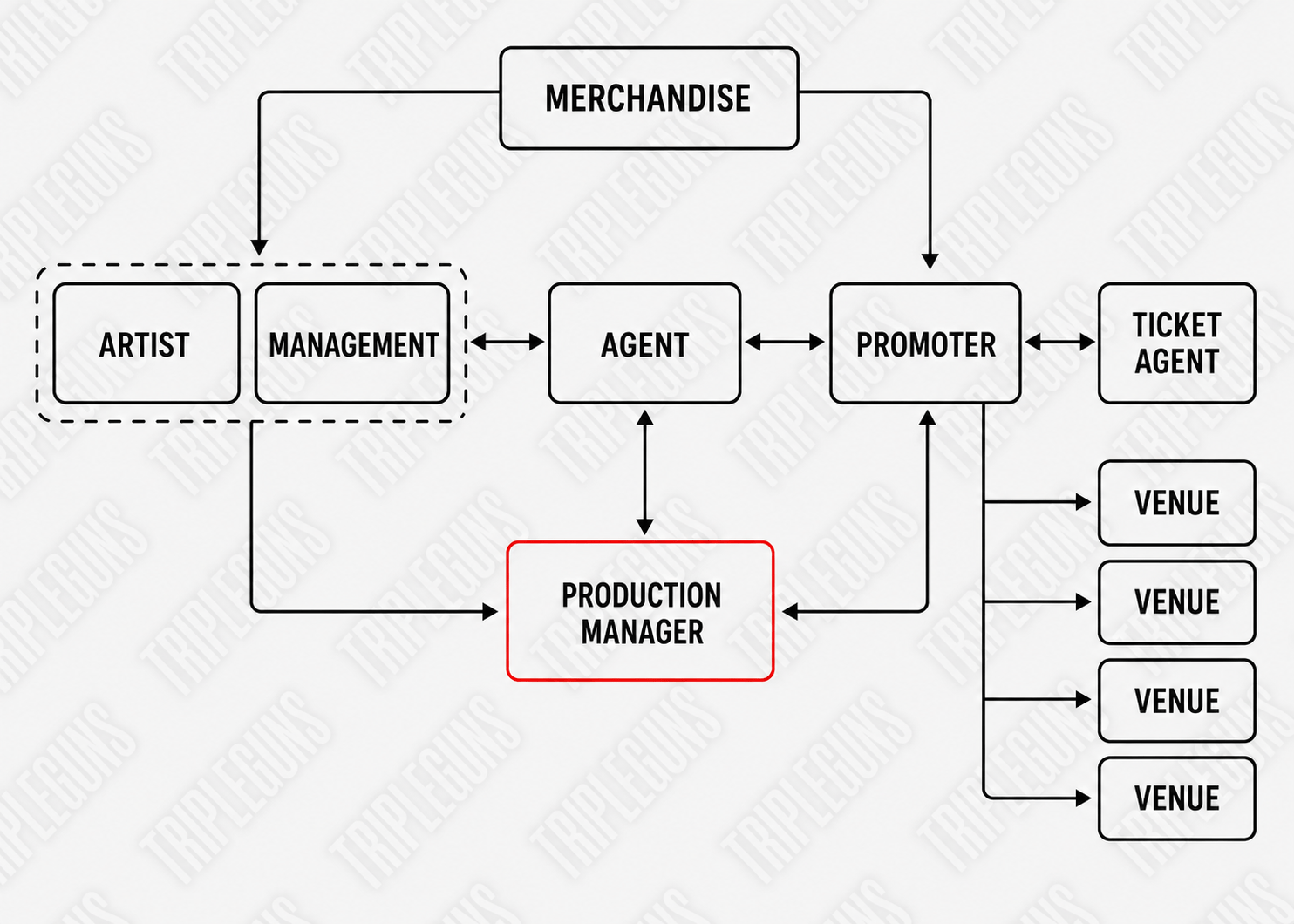
At a high level, live events are shaped by the following players:
- Artist / Management
- Booking Agent
- Promoter
- Ticketing Company
- Venue
- Production Manager
- Technical and Operations Staff
- Sponsors / Brand Partners
Each of these roles is responsible for a different part of the live event. That is why a successful show depends not only on strong individual players, but also on how well all the players are connected and managed.
1. Concert Promoter
The central player responsible for making the show happen
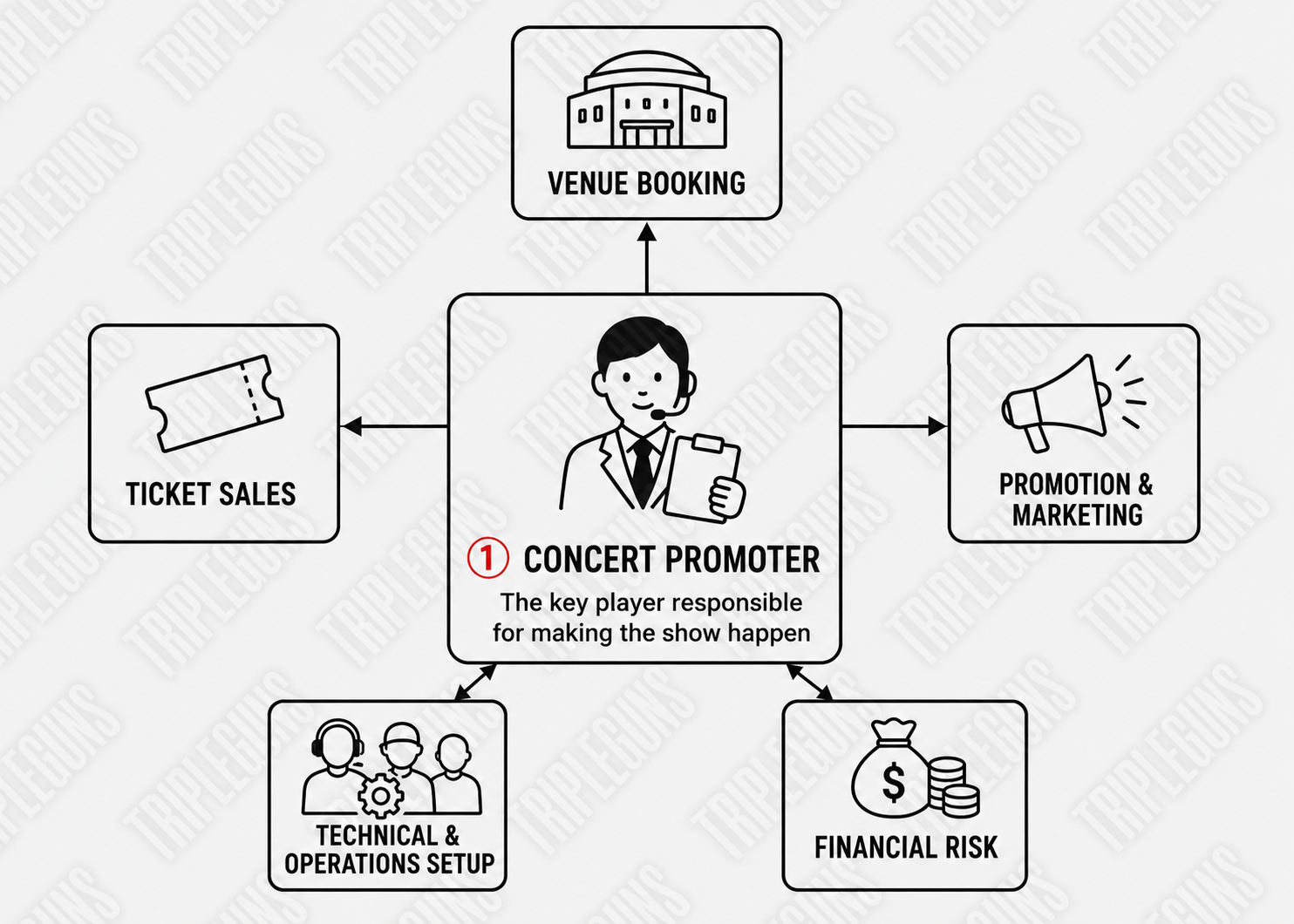
The concert promoter is one of the key players in making a live show happen.
They bring the event together as a business and as an operation: securing the venue, shaping the commercial plan, coordinating ticket sales, building the technical and operational framework, and taking responsibility for the event itself.
In practical terms, the promoter is the party that decides to put the show on and takes ownership of making it happen.
Typical responsibilities include:
- Venue booking
- Budget management
- Promotion and audience building
- Ticketing strategy
- Technical and operational planning
- Managing the commercial risk of the event
In short, the promoter sits at the centre of the show when it comes to money, venue, and delivery responsibility.
2. Booking Agent
The role that creates opportunities and negotiates terms
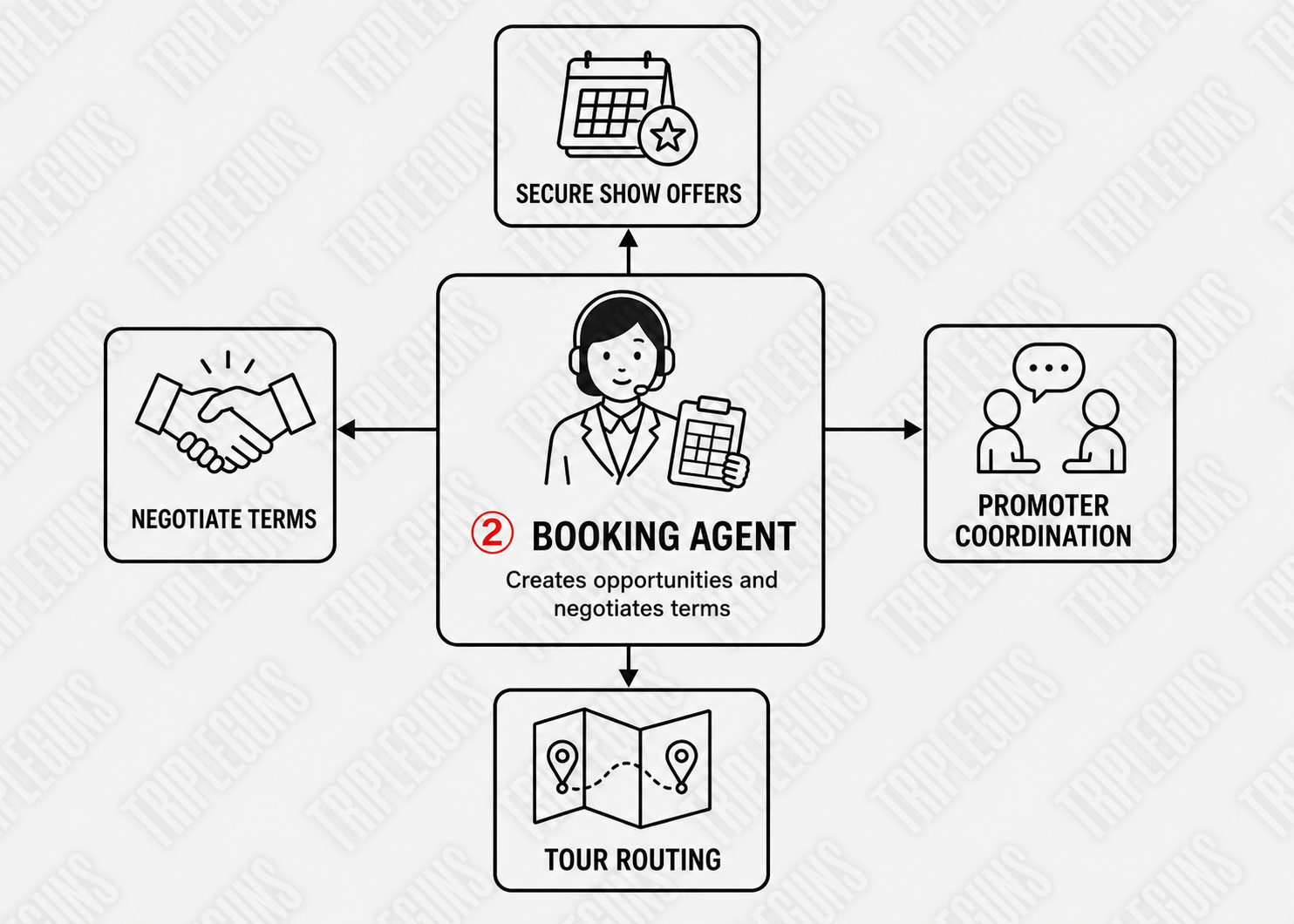
The booking agent is the person or team that connects artists with live show opportunities.
They liaise between the artist and the promoter, helping to secure offers, shape touring opportunities, and negotiate the terms of each performance.
Typical responsibilities include:
- Securing show offers
- Negotiating deal terms
- Coordinating with promoters
- Building and organising tour routing
Every live show comes with different conditions. Because of that, the booking agent plays an important role in identifying the right opportunities for the artist and structuring them in a workable way.
3. Ticketing Company
A hub for sales, pricing, data, and settlement
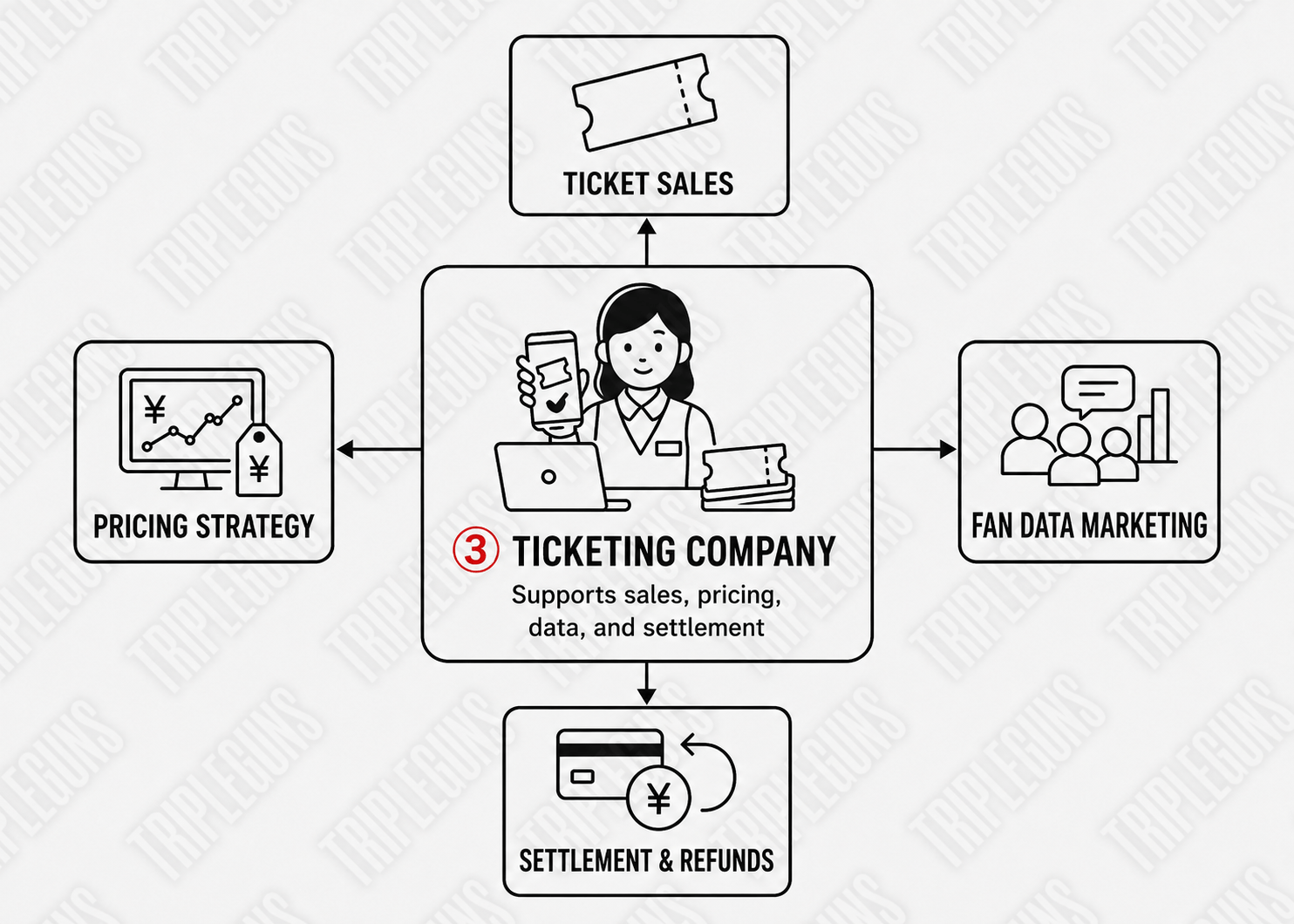
A ticketing company is the sales channel through which audiences buy tickets for a live event. But its role goes far beyond simply selling tickets.
In today’s live business, ticketing companies often provide support for areas such as:
- Ticket sales
- Pricing strategy
- Sales data and customer data
- Settlement and payment flow
- Refund handling when needed
This means that ticketing is not just an administrative function. It is also closely tied to marketing, revenue planning, and cash flow.
For promoters in particular, ticketing terms matter greatly because payment timing and settlement conditions can directly affect how a show is financed and managed.
In that sense, ticketing companies are a major operational and commercial hub within the live music industry.
4.Venues
A player that shapes show conditions, audience experience, and profitability
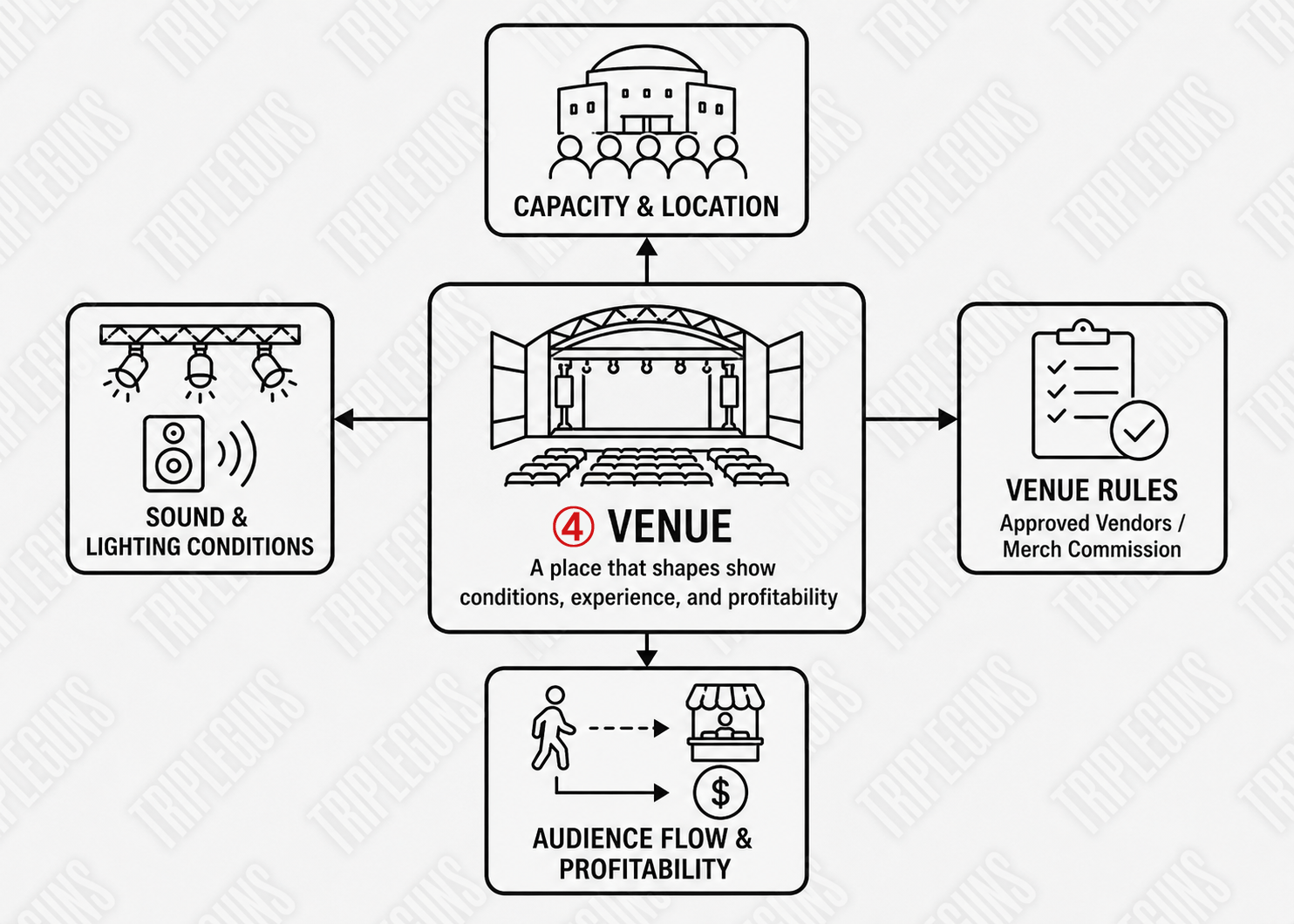
A venue is not just the place where a performance happens.
It directly affects the scale of an event, the audience experience, the production possibilities, and the financial outcome of the show.
Key venue factors often include:
- Capacity and location
- Sound and lighting conditions
- Venue rules and operational restrictions
- Crowd flow inside the building
- Food, beverages, and merchandise conditions
- Overall profitability of the event
Because of this, the choice of venue can have a major impact on both the audience experience and the business model of a live show.
A venue is not simply a backdrop. It is an active player in the structure of the event.
5. Production Manager
The command centre that turns a show into reality
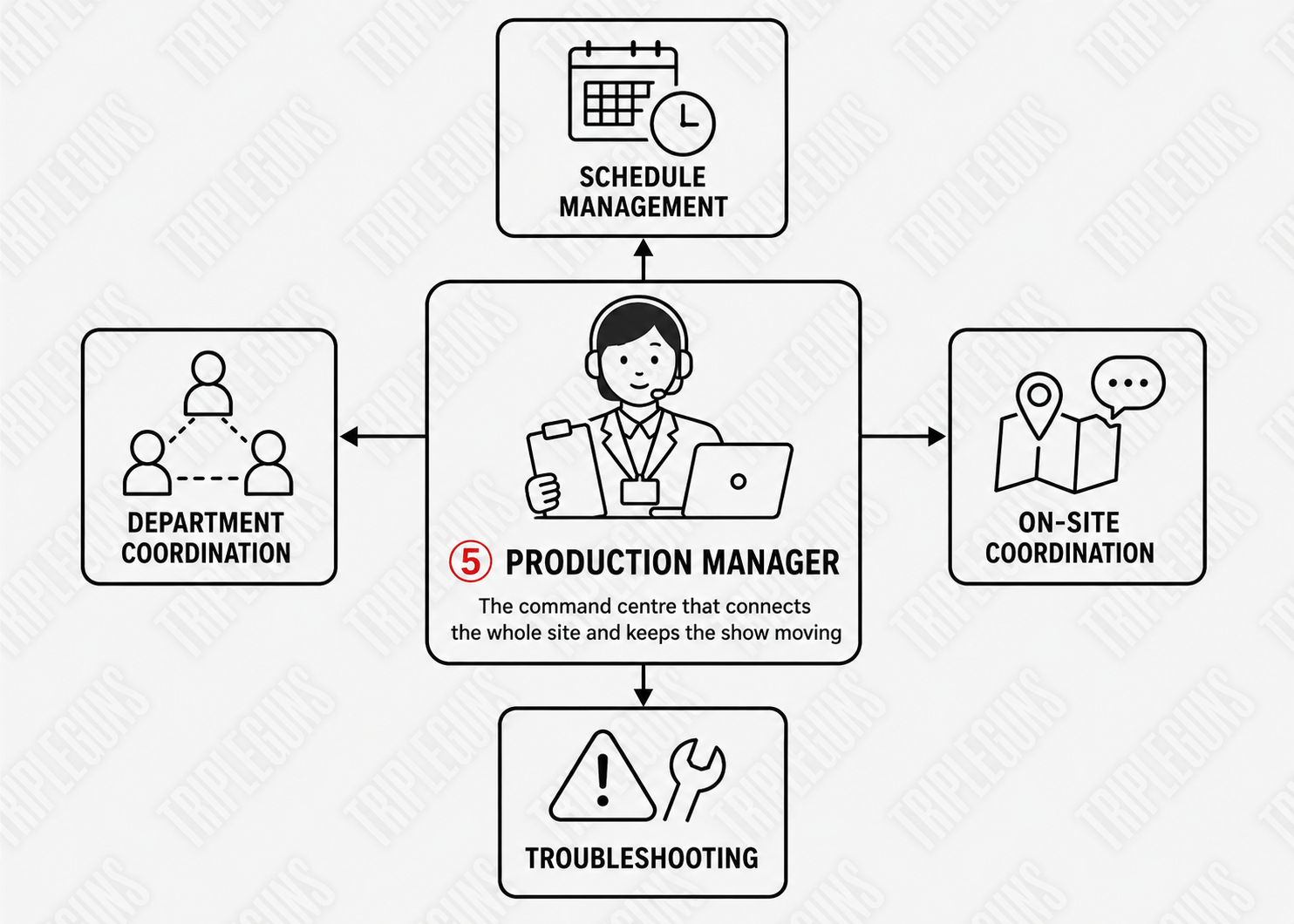
If the promoter, venue, and agent create the framework of the show, the Production Manager is the person who makes the show work within that framework.
Even if the artist is ready and tickets have been sold, the show cannot happen unless the equipment arrives, the schedule is built properly, each department is aligned, and the site is running safely and efficiently.
That is where the Production Manager comes in.
The Production Manager is responsible for turning the plan into a working reality by connecting all departments and keeping the event moving.
Typical responsibilities include:
- Building and managing the schedule
- Coordinating across departments
- On-site production coordination
- Troubleshooting and problem-solving
- Aligning the artist side, promoter side, and venue side with each other
- Keeping the show on time, on budget, and operationally workable
In other words, the Production Manager is the command centre of the live production process.
Production Managers exist on both sides
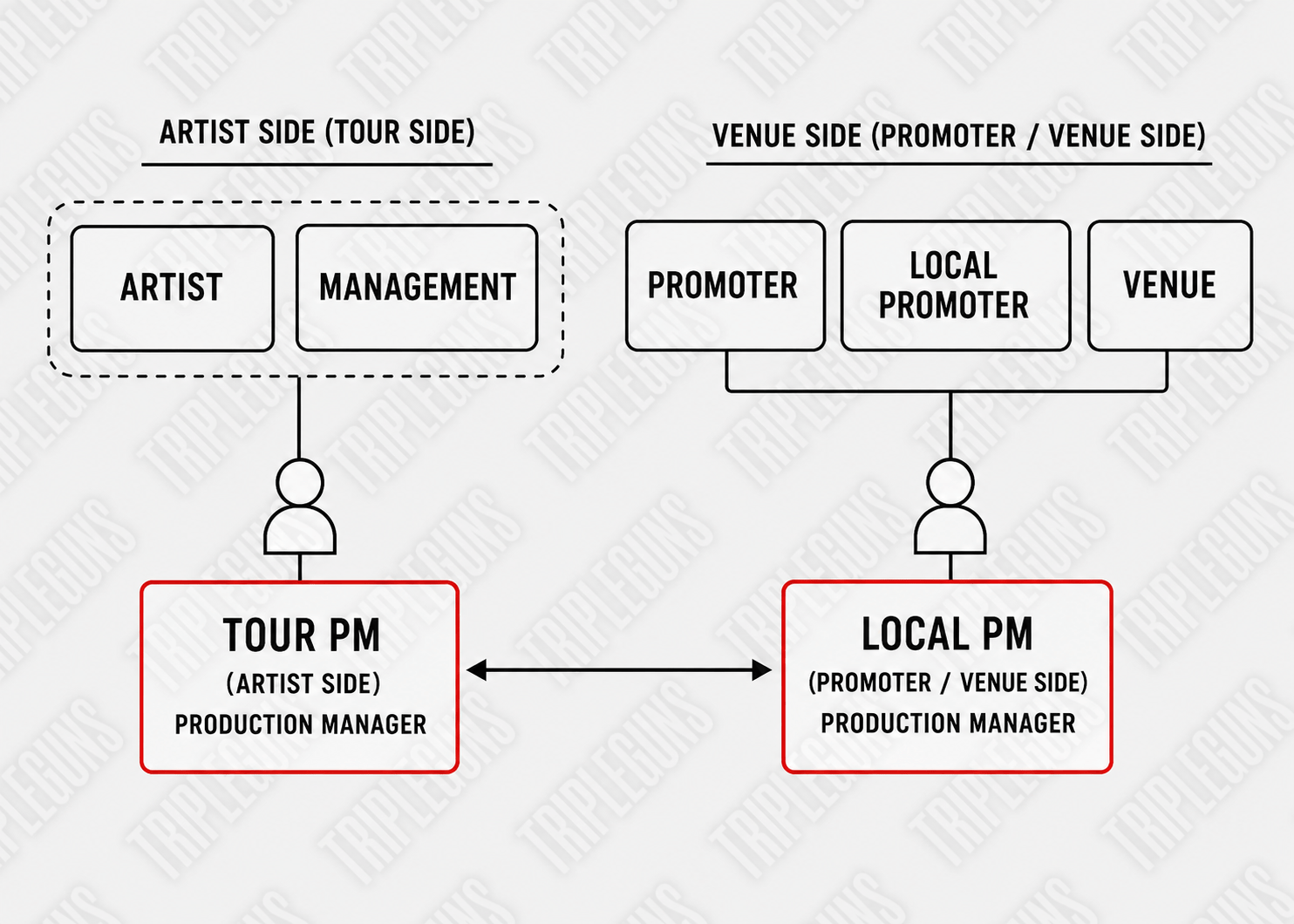
The artist side and the venue side
The role of Production Manager exists on both sides of the live business.
Tour PM (artist side)
Travels with the artist and works to maintain a consistent show quality at every venue.
Local PM (promoter / venue side)
Understands the rules of the territory and the unique characteristics of the venue, and helps the touring side set up safely and smoothly.
The Tripleguns advantage:
We understand both the emotions and the logic on each side
What makes Tripleguns different is that we understand both the Japanese artist side and the local overseas venue side on a practical, working level.
What does that mean in practice?
When a Japanese artist performs overseas, the touring side often wants to recreate the same quality and standard they have at home. At the same time, the local venue side is working within the realities of labour rules, available gear, local crew structures, and venue limitations.
In production, this is where creative expectations and practical reality often collide.
Tripleguns understands both the touring team’s priorities and the venue or promoter’s technical and operational conditions. We translate each side into the other’s professional language and help find workable solutions that both sides can accept.
So where does Tripleguns sit in this industry?
Within the wider structure of the international live music business,
Tripleguns operates as a production management partner on the ground.
Supporting the full production and coordination layer
When Japanese artists perform overseas
For Japanese artists to succeed in Western live show business structures, they need to navigate major differences in language, business culture, venue rules, and production workflow.
Tripleguns supports that connecting layer and this helps the entire process run smoothly.
For example, we support:
- Venue coordination for overseas shows
Acting as a bridge between Japanese teams and overseas promoters or local production companies - Technical coordination
Confirming stage, lighting, sound, and video requirements in advance, including equipment arrangements and technical rider negotiations - On-site show operation
Handling production management on tour and on the day of the show - Bridging cultural and language gaps
Helping both sides work through differences in communication style, expectations, and on-site working culture
That is the value Tripleguns brings: practical, on-the-ground support that keeps international projects moving.
Final thoughts
The international live music industry includes many working methods and assumptions that are very different from those commonly found in Japan.
It is an industry that creates a place for artists to perform, but it is also one that has to bring together venues, staff, transport, budget, production, promotion, and sales to make one live event happen.
Tripleguns works within that structure as a production and coordination partner, connecting Japan and the world to make concerts and events happen in reality.
If you are an artist, manager, or company considering an overseas performance, we would be happy to help you explore the question:
How can we make it happen?
Please feel free to get in touch with Tripleguns anytime.
