
We recently went to see ABBA Voyage in London!!
Launched in 2022, ABBA Voyage is a concert experience in which AI and motion-capture technology are used to recreate ABBA in their prime, performing alongside a live band for 100 minutes.
In other words, it is a concert without the real ABBA being physically there.
That said, it is far more than a simple “hologram show”. With a 10-piece live band, incredibly precise digital versions of ABBA that feel almost impossible to distinguish from the real thing, and a purpose-built arena designed specifically for this production, the result is a completely new form of entertainment that sits somewhere between a concert and a musical.
The official website describes it as “a concert like no other”, while reviews have called it “pop’s future” and “the future of music”. A dedicated venue is also planned for New York next, proving that this is not just a one-hit wonder, but the birth of a new entertainment business model.
1. What is ABBA Voyage?
ABBA Voyage is a long-running London production starring digital recreations of the four members of ABBA in their younger years, known as the “ABBAtars”.
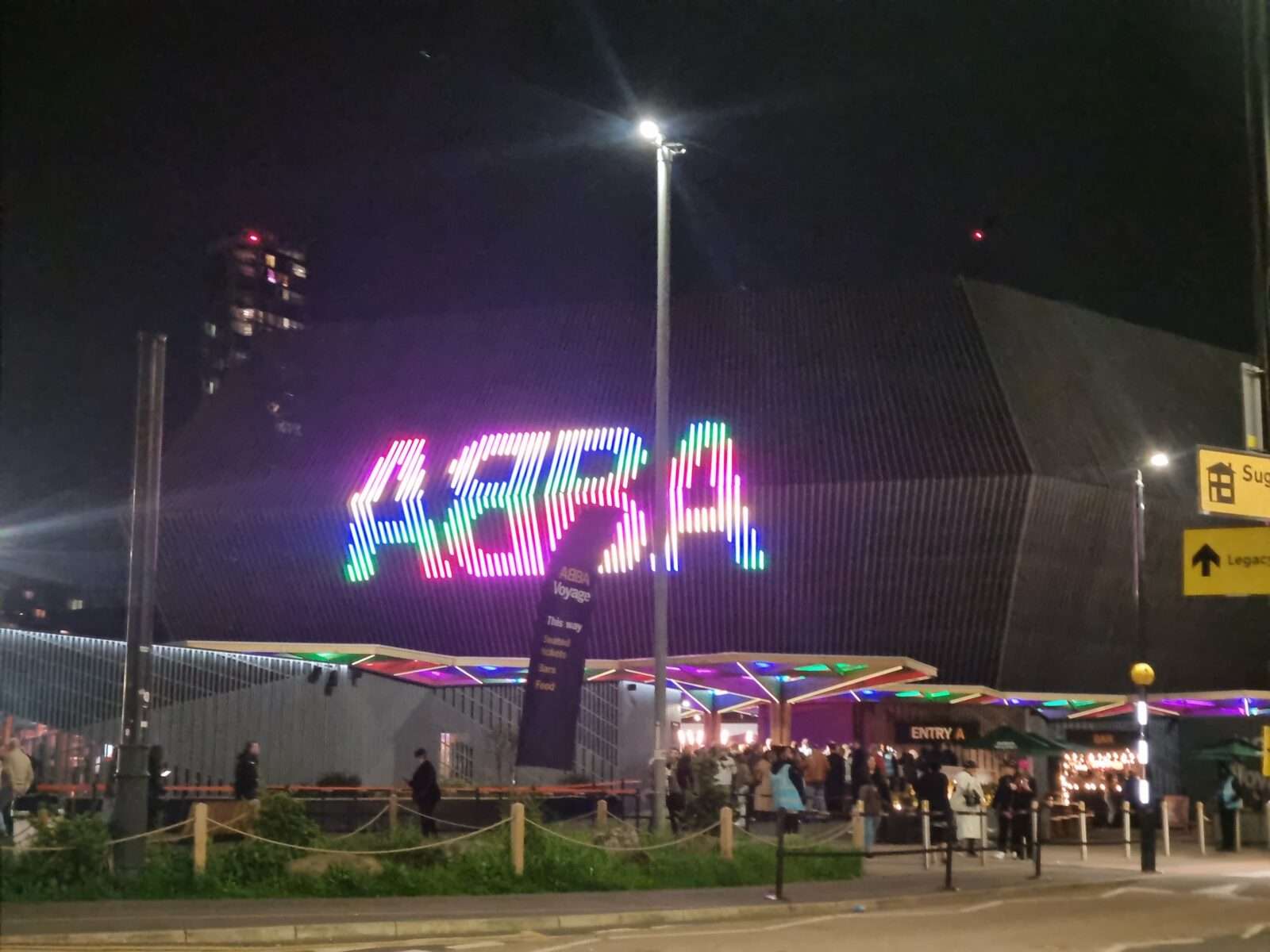
For readers unfamiliar with East London, the venue feels like a purpose-built entertainment destination placed just one stop away from a major transport hub in one of the city’s most rapidly redeveloped areas.
The show takes place at ABBA Arena, located one stop from Stratford station, the area best known for London Stadium and the Queen Elizabeth Olympic Park. It is a specially built venue with a capacity of around 3,000 people, combining a dance floor with seated areas. The show runs for around 100 minutes, supported throughout by a 10-piece live band.
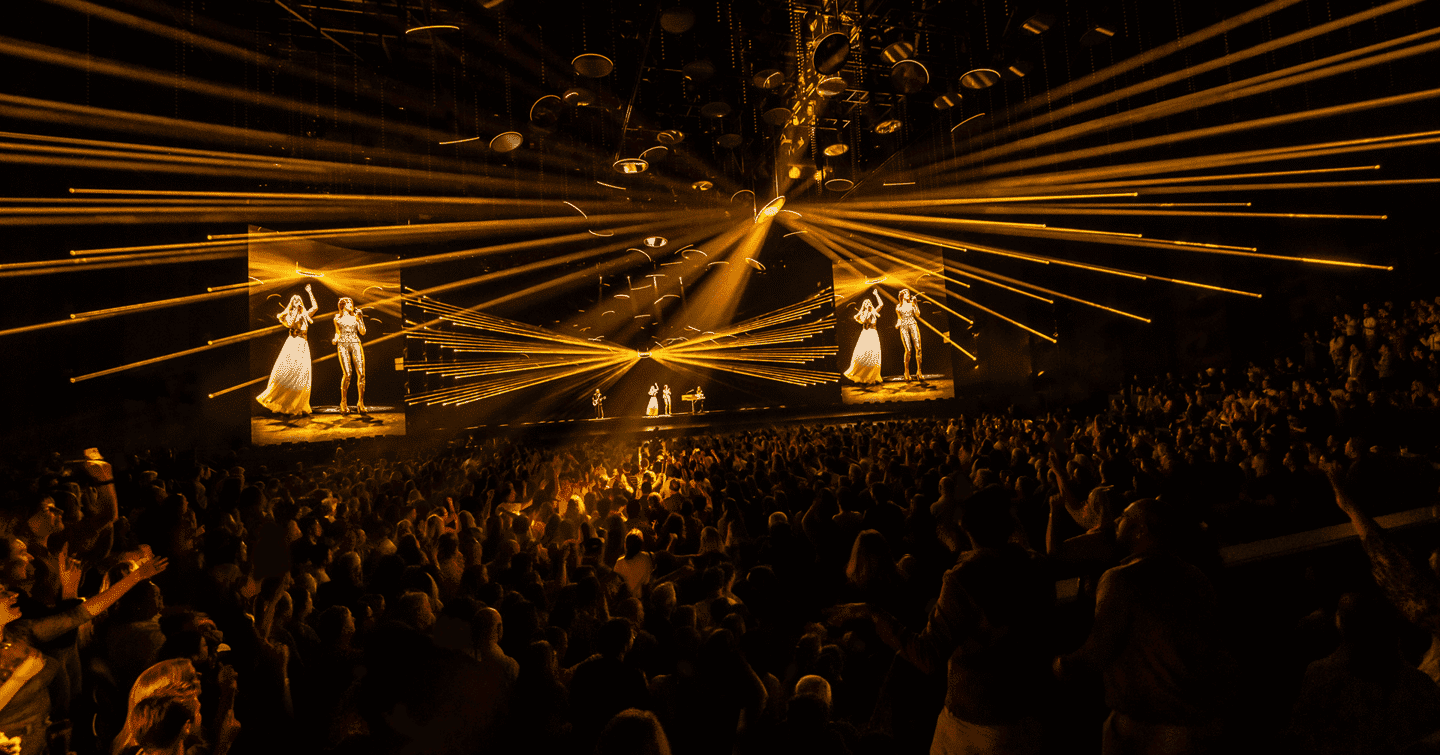
What is especially striking is how positively the show has been received, even by London’s famously critical reviewers. Time Out described ABBA Voyage as “a spectacular vision of pop’s future”, while the Evening Standard wrote that “this show really does look like the future of music”.
ABBA Voyage is not simply a nostalgic revival of classic hits. It is being received by both media and audiences as something much bigger: a glimpse into the future of the pop concert itself.
2. ABBA’s Position in the UK
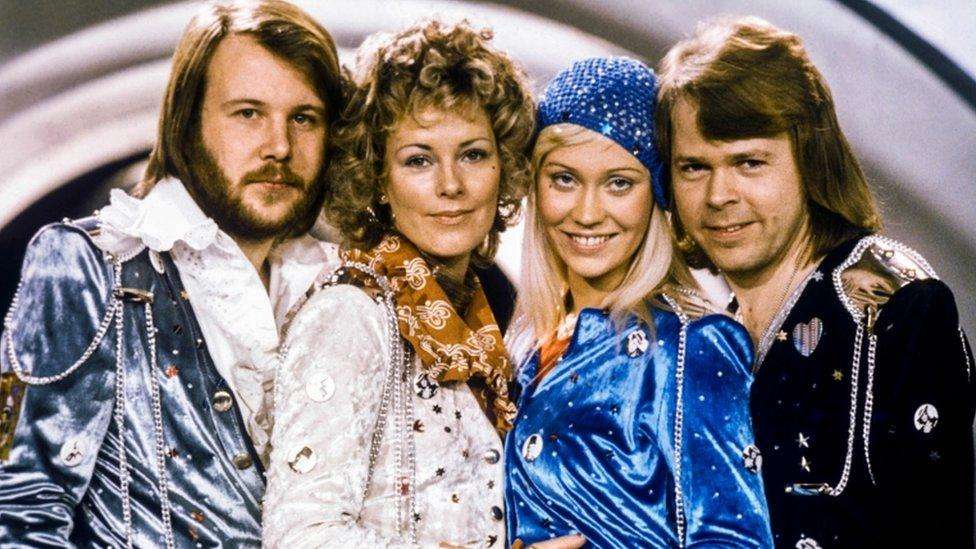
In Japan, ABBA is often understood as a legendary pop group with global hit songs. That is true, of course. Thanks in part to films such as Mamma Mia!, ABBA songs are also more familiar to the general public in Japan than those of many other Western artists.
But in the UK, ABBA feels even bigger than that. They are something close to cultural royalty.
Their greatest hits album, ABBA Gold, is one of the best-selling albums in British chart history, and their songs are popular across generations in a way that very few artists can match. Queen Elizabeth II famously loved “Dancing Queen” as well.
So in Britain, ABBA is not just a successful pop act from the past. They are a true national group, loved by everyone from young fans to grandparents.
What I felt at the venue was very different from the way “legendary Western artists” are often appreciated in Japan. The emotional connection was deeper and more communal.
If I had to describe it, I would say ABBA feels almost like a shared musical prayer for white British seniors. Not literally gospel, of course, but something with a similar emotional function: songs that everyone knows, songs everyone can sing, songs that let people return to another time in their lives.
Family, youth, romance, disco nights, television, car radios, weddings — memories of all those core moments in life seem intrinsically tied to ABBA’s music. This is not a data-based statement, just my honest impression from being there. But I think that is why ABBA has remained so beloved in Britain for so long: not only because the songs are famous, but because they act as a memory machine for people’s lives as well.
3. Audience, Ticket Prices, and Access to the Arena
▶Audience
I attended a weekday evening performance. Based on what I observed, roughly 80% of the audience appeared to be white, with most people in the 40s to 70s age range.
There were younger audience members too, but the majority were clearly people who had grown older with ABBA, along with some fans from later revival waves.
What stood out most was the fashion. There were so many people wearing sequins, glitter, disco-inspired outfits, rainbow shirts, and even tropical leis. It was brilliant.
It was genuinely lovely to see older people, who probably held serious and high-level day jobs, fully embracing the fun and turning up in bold, joyful outfits without caring what anyone would’ve thought of them.
The atmosphere felt bright and happy even before the show started. Just watching the audience was entertaining in itself. ABBA Voyage was not a show where people simply sat down and watched passively. It already felt like a participatory celebration before the music had even begun.
▶Ticket prices
According to the official website, seated tickets start from £39.70, while dance floor tickets start from £56.20. There is also a £35 dance floor ticket for ages 16–25.
Prices vary depending on date and availability, but the show officially recommends booking early, and weekday performances tend to be easier to access.
There are also seasonal packages and themed ticket offers, including group and birthday-related options, which shows how strong the marketing strategy behind the production is.
▶Access
The venue is ABBA Arena, Pudding Mill Lane, London E15 2RU, located within the Queen Elizabeth Olympic Park.
The nearest station is Pudding Mill Lane on the DLR, which is officially listed as just a one-minute walk away. From Stratford station, it is around 25 minutes on foot. For most visitors coming from central London, the easiest route is to travel to Stratford and change to the DLR.
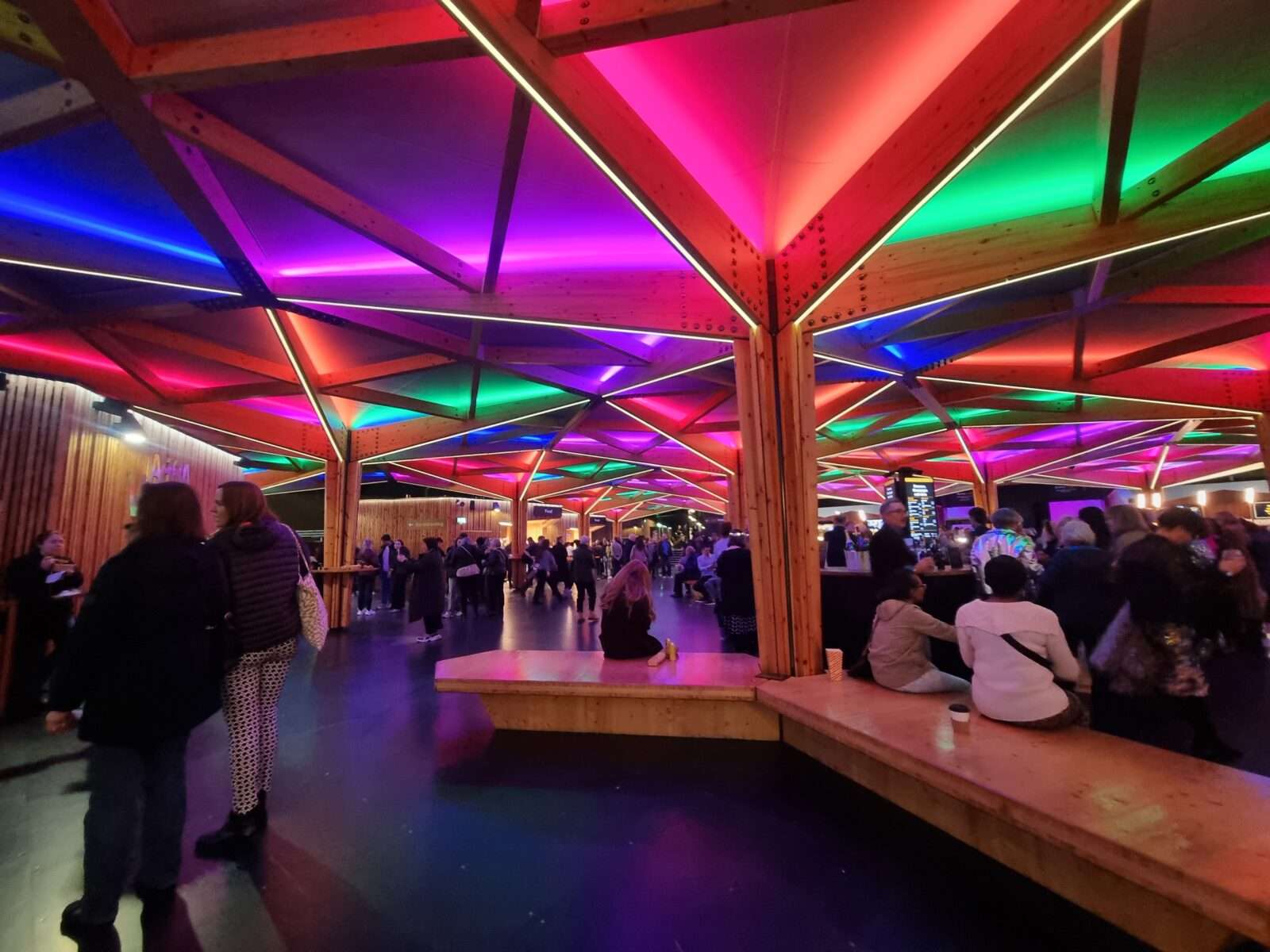
The official guidance recommends arriving one hour before the show, and that makes sense. There are plenty of food and drink options, bar areas, and merchandise shops, so time passes very quickly while you wait.
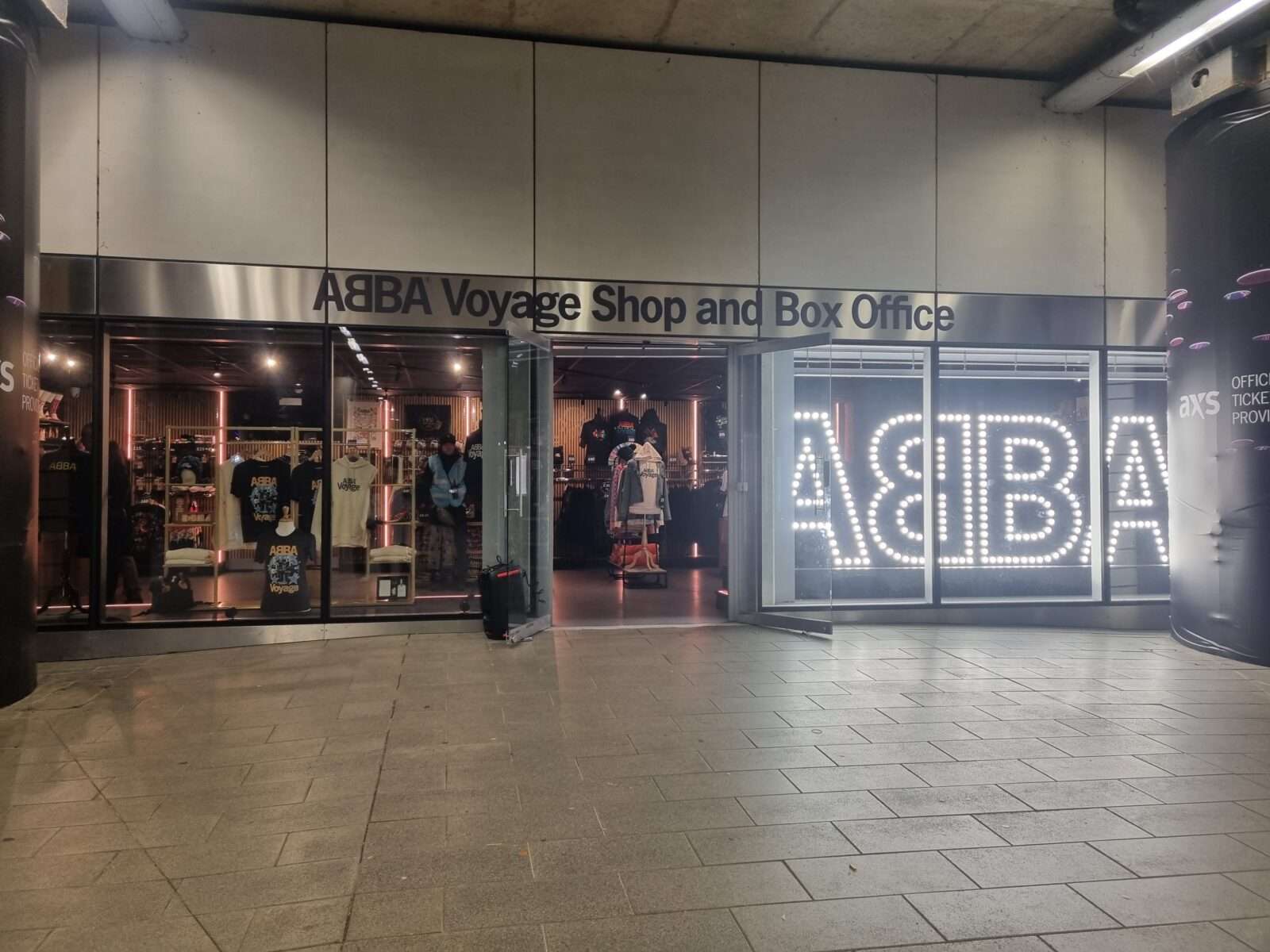
There is also an official merchandise shop at the station and inside the venue itself, and I have to say, the designs are temptingly good.

4. This Production: Why It Feels More Real Than Reality
Current setlist
The setlist was updated around the show’s third anniversary in 2025. “When All Is Said and Done” was removed, and several songs were added. Reports in 2026 suggest that “The Name of the Game” and “Money, Money, Money” are now fixed, while “Super Trouper” and “Take a Chance on Me” may alternate depending on the performance date.
A commonly reported 2026 setlist looks something like this:
- The Visitors
- Hole in Your Soul
- SOS
- Knowing Me, Knowing You
- Chiquitita
- Fernando
- Super Trouper or Take a Chance on Me
- Mamma Mia
- Does Your Mother Know
- Eagle
- Lay All Your Love on Me
- Summer Night City
- Gimme! Gimme! Gimme! (A Man After Midnight)
- Voulez-Vous
- The Name of the Game
- Don’t Shut Me Down
- I Still Have Faith in You
- Waterloo
- Money, Money, Money
- Thank You for the Music
- Dancing Queen
- The Winner Takes It All (encore)
5. Reading the Show From a Production Point of View
1) The lighting design is extraordinary
Before the opening, animated visuals of snow falling in a forest — perhaps a nod to Sweden, ABBA’s home country — were projected across the space.
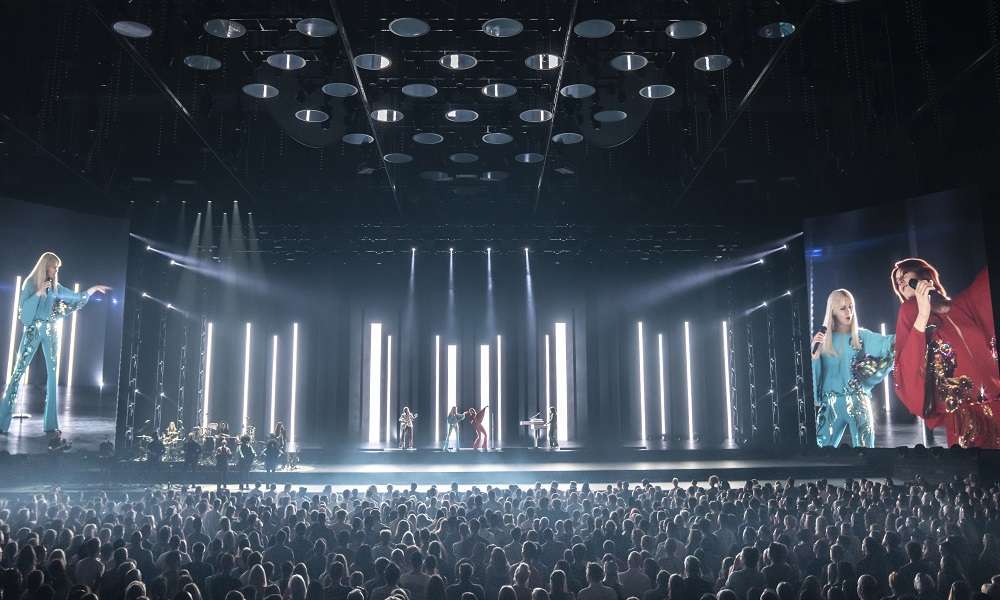
Then the 360-degree LED environment came alive, filling the audience’s vision with light and afterimages, almost as if the production was deliberately shifting the audience’s sense of reality.
It felt as though the show was saying: “Prepare to accept what is not real as reality.”
Only after the audience’s eyes and brain had been tuned to this new world did the young versions of the four ABBA members rise from the stage floor.
With what is said to be more than 500 moving lights and a giant LED wall, the detail in the visual design is remarkable. Seen with the naked eye, the avatars are so convincing that you almost forget you are looking at something digital.
2) Why digital ABBA feels real
The main draw of ABBA Voyage is not simply that young ABBA appears digitally on stage to sing and dance in front of you.
The real magic is that the side screens and visual storytelling are so convincing that, at some point of time, the meaning of “reality” itself starts to blur in your mind.
Your brain knows this is not physically the original ABBA. But when you combine the lighting, the camera language, the edits, the live band, and the audience’s emotional energy, a sense of authenticity overwhelms you anyway.
At that point, it is no longer really about AI technology on its own. You just think: that’s just how unbelievably good the overall direction is.
3) The slight strangeness of the MC actually helps
One of the most surprising elements is that each member has moments of MC during the show. The ABBAtars make jokes and speak to the audience.
And this creates a very strange reaction: “Wait… Is this a live show?”
That slight tension actually works in the show’s favour. As Time Out noted, it may not have the full spontaneity of a traditional live concert, but it still works brilliantly.
In other words, ABBA Voyage reduces the unpredictability of a live show and instead maximises the completeness of the package. In that sense, it feels closer to a world-class attraction at Disneyland or Universal than to a normal concert.
4) The clever use of iconic songs
Looking at the setlist, ABBA Voyage is not just a parade of hits.
It opens with accessible, familiar songs that immediately connect with the audience. Then it moves into a middle section with more visual storytelling, lasers, costume changes, and narrative sequences. Finally, it unleashes a run of songs that everyone can sing together.
From “Money, Money, Money” to “Dancing Queen”, the final section turns into a complete celebration. The relationship between the meaning of the songs and the visual design is direct and clear. It is classic entertainment architecture, and it works.
The colours, emotions, and cultural memory attached to the songs all line up with what the audience wants. That is why it feels so powerful.
5) The live band brings everything together
As the official materials say, ABBA Voyage is supported throughout by a 10-piece live band.
Yes, the visuals are stunning. But the reason the show truly works is the physical force of the live sound: the low-end pressure, the drums, the power of the backing vocals, and the vibration of live music in the room.
That is what stops digital ABBA from feeling detached. It is what makes the entire experience function as a concert rather than just a visual display.From a production point of view, the star of the technology is not the screen itself, but the synchronisation between the visuals and the live music.
6. What ABBA Voyage proves
What struck me most strongly about ABBA Voyage is this:
Even if the artist is not physically there, audiences can still be deeply moved if the package is strong enough.
That does not mean artists are replaceable. Quite the opposite. What this show proves is that making an “artist-absent” performance work actually requires an even more detailed and sophisticated level of production design than a normal live show.
ABBA Voyage crosses the boundaries between concert, theatre, visual art, long-run residency, IP experience, and tourism content.
And the reason it works as a long-running London production is not simply because of ABBA’s popularitybut because the whole experience has been carefully crafted: easy access, clear pricing, a venue that encourages dressing up, a satisfying 100-minute runtime, and a strong sense that audiences have seen something from the future.
This may also be where it differs from venues like the Las Vegas Sphere. Sphere may leave some visitors feeling, “That was amazing, but once is enough.” ABBA Voyage feels different. It makes you curious about what repeat attendance is like. I would genuinely love to know the return rate.
7. Why This Matters for Live Production Professionals
ABBA Voyage is a rare case study that shows, at a very high level:
- how far digital performance can go in creating a sense of “real presence”
- how live musicians and visual technology can be integrated without audience discomfort
- how important overall experience design is, including audience profile, fashion, pricing, access, and pre-show atmosphere
Whether or not “2.5D theatre” is the right phrase, I definitely came away feeling that I had seen one possible future form of the concert.
If you are visiting London to research entertainment, ABBA Voyage is not just a tourist-friendly hit show. It is an important case study for anyone thinking about the future of live production, residency formats, and long-running entertainment experiences.
Even I, knowing only a handful of ABBA songs, found myself singing along to “Chiquitita” and “Mamma Mia”, and by the end I had both hands in the air singing “Dancing Queen” with everyone else.
And honestly, a space where the entire audience looks that happy is something special.
Tripleguns works as an on-site production and operations partner for Japanese artists and companies developing projects overseas.
From international concerts and world tours to exhibitions, pop-ups, IP events, and long-running entertainment formats, we help turn ideas into workable projects on the ground, navigating local production realities, cultural differences, and communication gaps.
This visit to ABBA Voyage was a strong reminder that in today’s entertainment business, success depends not only on the strength of the content itself, but also on experience design, venue operations, audience journey, and local execution.
If you are looking for a reliable local partner for your overseas project, please feel free to get in touch with Tripleguns.