
Interpreting Actual Artist Riders from a Production Company’s Perspective
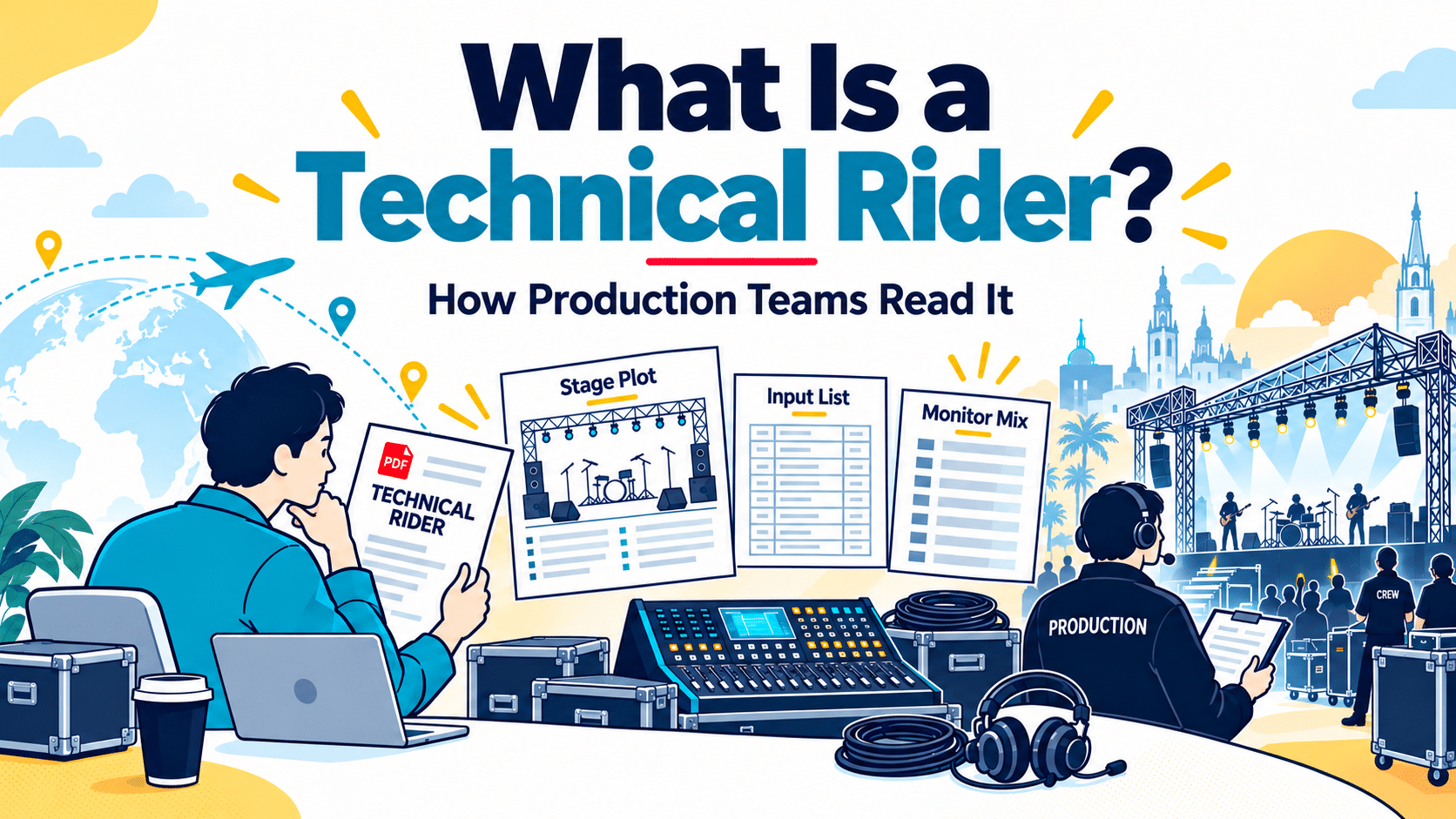
Once an overseas show is confirmed, one of the first things that lands in the production team’s inbox is a PDF file.
Sometimes it is only a few pages long.
Sometimes it runs to several dozen.
Open it up and you will find terms such as FOH, Monitor, Stage Plot,
Input List, Backline, Rigging, Power, and Local Crew.
For anyone seeing this for the first time, it can look almost like a secret code.
This document is known as a Rider, or more specifically a Technical Rider, and it is an essential part of international live production.
At first glance, it may look like little more than a list of equipment an artist wants.
But once you start working on international tours, you realise that a Technical Rider is much more interesting than that.
It tells you how an artist actually builds their live show.
It also contains years of production experience accumulated across tens, sometimes hundreds, of performances.
In this article, we will look at publicly available riders from DJs, rock bands, jazz orchestras and world music artists, and explain what a production company actually looks for when reading them.
The riders mentioned in this article are current or historical documents that have been made publicly available by artists or related organisations. They may not reflect the artists’ current touring requirements
First of all, what is a Technical Rider?
A Technical Rider is a document used by an artist to tell the promoter, venue and local production team:
“This is the environment we need in order to make this show work.”
The exact contents vary widely between artists, but a rider may include:
- Stage
- Audio / PA
- FOH
- Monitor / IEM
- Backline
- Lighting
- Video / LED
- Rigging
- Power
- Local Crew
- Communication
A small DJ show may only require a few pages.
A band rider may add a Stage Plot and Input List.
For a large-scale tour, the document can expand to dozens of pages covering Video, Camera, Laser, SFX, Rigging, Crew and even the Production Schedule.
The larger the production becomes, the more the Technical Rider stops looking like an “equipment list” and starts looking like a blueprint for reproducing the same show in another country and another venue.
Do we simply provide everything written in the Rider?
This is probably one of the easiest things to misunderstand when you first start reading Technical Riders.
The answer is:
Not necessarily.
Some requirements are absolutely essential.
But others come with different levels of priority:
MUST: mandatory
PREFERRED: the artist’s preferred option
ACCEPTABLE: an alternative that can be used
SUBJECT TO APPROVAL: requires artist or production approval
So not every line carries the same weight.
For example, imagine the audio requirement says:
“DiGiCo Quantum 338 Preferred.”
The venue does not have a Q338. It only has another console.
That does not automatically mean:
“We need to rent a Q338 or the show cannot happen!”
The first step is to ask the artist’s FOH Engineer:
“The preferred console is not available. Would this alternative be acceptable?”
On the other hand, if the artist says:
“This console is required because our show file only works on this system.”
then the local production team may have to search very hard for that exact console.
Reading a Technical Rider thus requires skill and is not the same as ordering everything on the page like a shopping list.
Once the Technical Rider arrives, the Advance begins
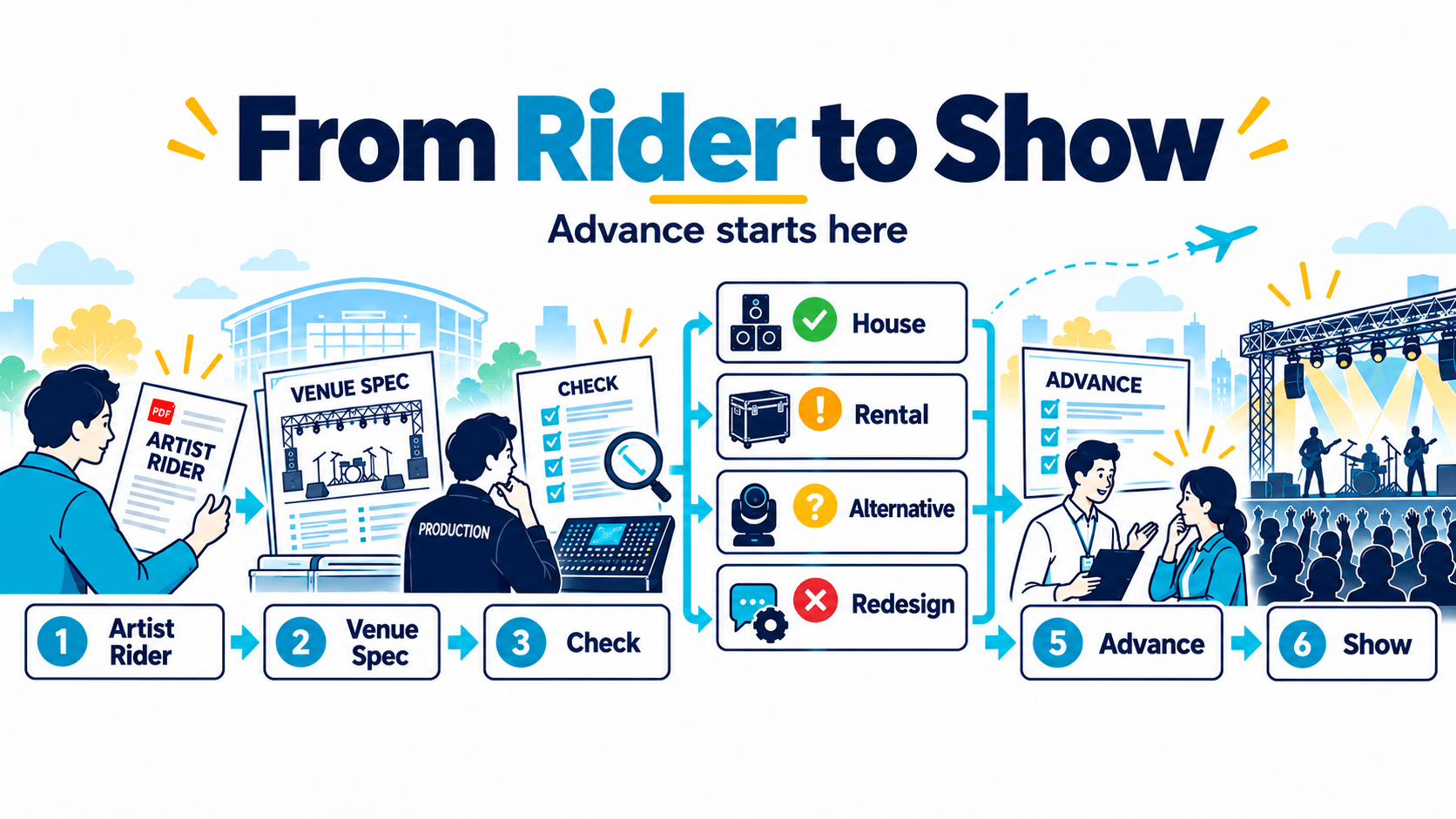
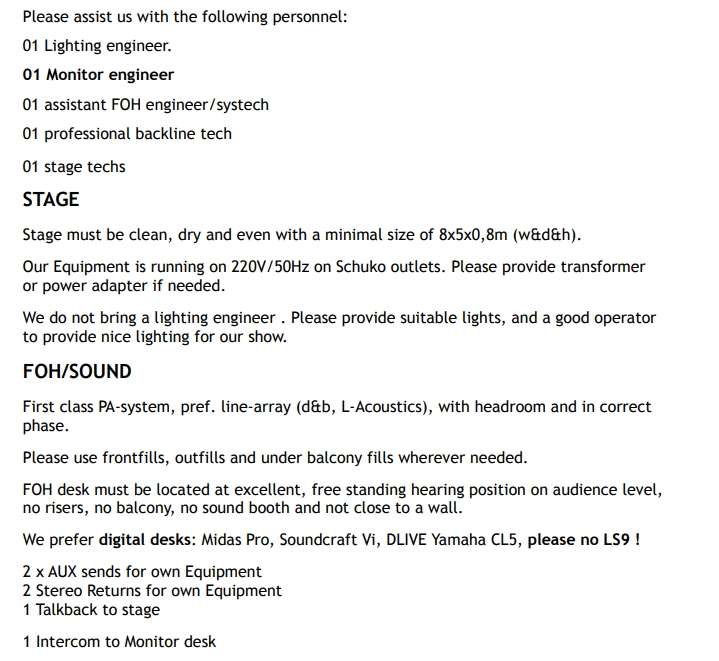
On the production side, we compare the Artist Rider with the venue’s technical specifications.
Venues normally have their own document summarising the equipment, stage and technical infrastructure available in-house.
We call this the Venue Spec.
One of the Production Manager’s main jobs is to work out how closely the Artist Rider matches what the venue can actually provide.
The process, simplified, looks like this:
ARTIST RIDER
↓
VENUE TECHNICAL SPECIFICATION
↓
CROSS-CHECK
↓
Does the venue have it?
↓
Yes → Use the house equipment
No → Consider rental
Different → Propose an alternative
Physically impossible → Adjust the show design
↓
ADVANCE
↓
SHOW
This is a major part of international live production.
The artist has an ideal version of the show in mind.
The venue has its own reality.
Advance is the process of bridging the gap between the two.
And that process is one of the Production Manager’s core responsibilities.
A Rider alone does not make a show
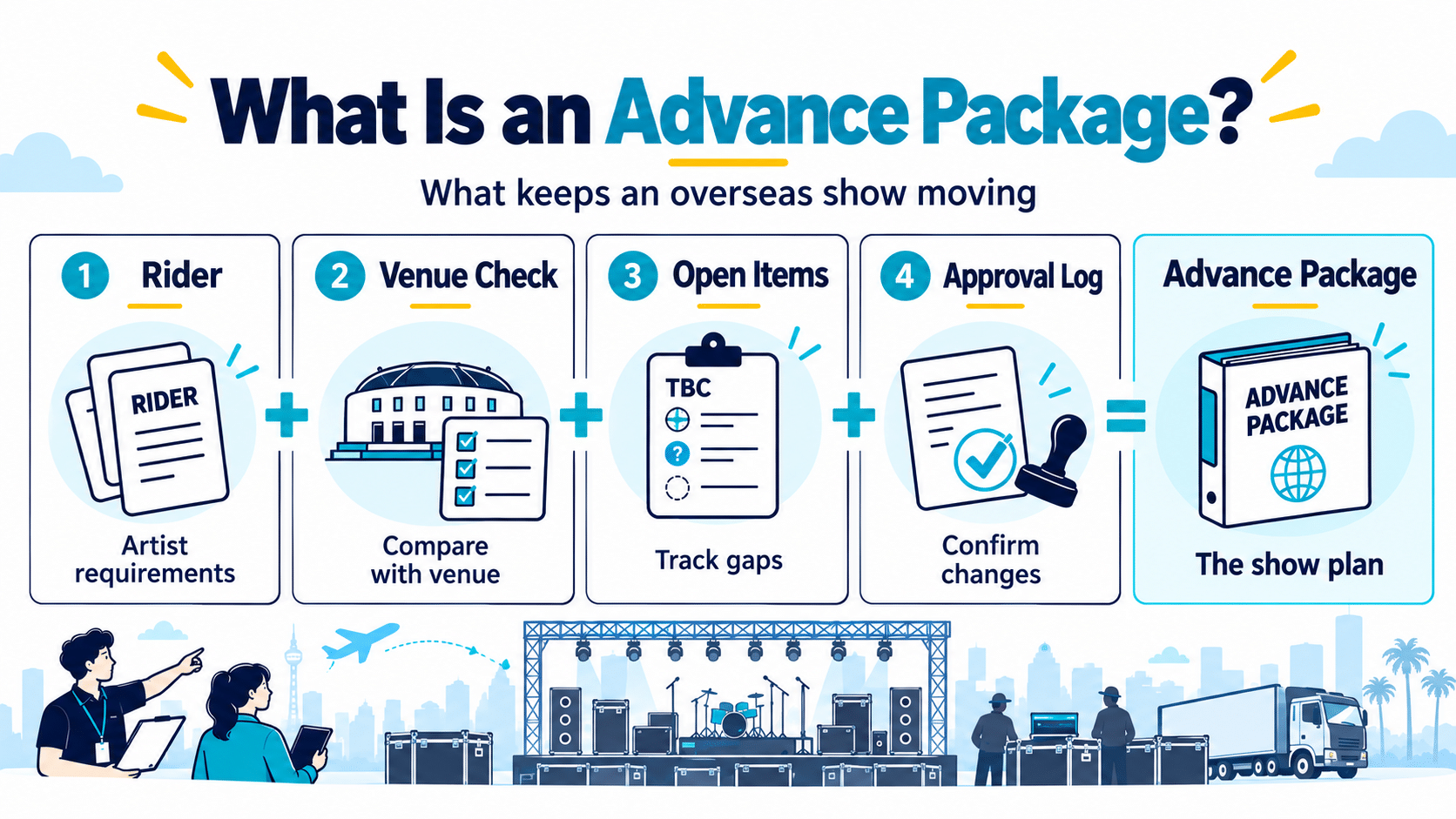
Rider + Venue Cross-check + Open Items + Approval Log
= Advance Package
▶ Rider
First, we define what the artist requires.
What is actually needed for the performance?
▶ Venue Cross-check
Next, the venue or local supplier replies with:
“This is what we have.”
We then compare that information with the Rider.
▶ Open Items
During production, there will always be things that are still unresolved.
For example:
- Lighting Plot: TBA
- Backline Substitute: under review
- Camera Layout: TBC
- Rigging Plan: waiting
Managing what has not yet been decided is extremely important.
So is sharing updated information and making sure nobody continues working from an old version of a document.
As Show Day approaches, the aim is to remove the unknowns one by one until everything is clear.
That is also part of the Production Manager’s job.
▶ Approval Log
This final part is surprisingly important.
For example:
House console is SD12 instead of Q338.
Approved by FOH Engineer on 15 Sep.
In other words, keep a record of:
Who approved what, and when?
One of the worst conversations to have on Show Day is:
“Nobody told me about this.”
or:
“Who approved this?”
On a large international project involving specialists from many different countries, an Approval Log is essential.
A Rider is the “blood, sweat and tears” of a touring band
When you first read a Technical Rider, you may wonder:
“Why is this so detailed?”
But once you compare several riders, your perspective starts to change.
Many of those seemingly minor requirements are the result of improvements made by artists and touring crews from the experience they’ve gained over tens or hundreds of shows.
Maybe there was not enough equipment.
Maybe the wrong console arrived.
Maybe the band could not hear properly on stage.
Maybe load-in took much longer than expected.
Maybe the musicians’ faces were not properly lit.
Successes and failures like these can happen in cities all over the world at any time.
Eventually someone says:
“Next time, let’s put that in the Rider.”
That is why I think a Technical Rider is, in a way, the blood, sweat and tears of a touring band.
So what do artists actually ask for in their Riders?
Looking at publicly available riders, the priorities can be completely different depending on the genre
▶ DJ | Four CDJs are not enough
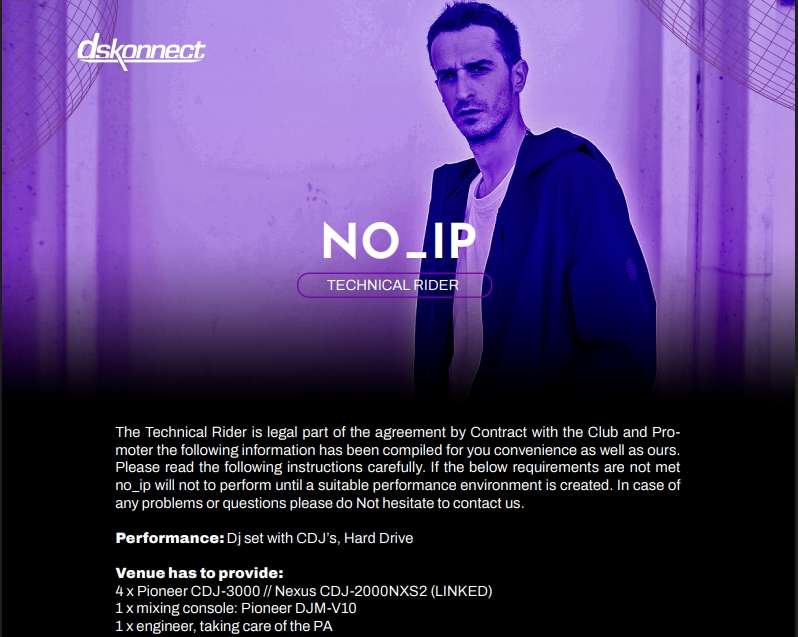
In the publicly available Technical Rider for electronic artist no_ip, the artist requests:
- Four Pioneer CDJ-3000 or CDJ-2000NXS2 players
- Pioneer DJM-V10
- Booth monitors
https://dskonnect.com/doc/technicalrider-no-ip.pdf
What is interesting is that the Rider does not simply say:
“Four CDJs.”
It specifically requires them to be LINKED.
The booth monitors also need to be positioned to the left and right of the artist, at or above shoulder height.
If there is not enough low-end in the booth, an additional booth subwoofer should be provided.
So:“Yes, we have CDJs.” is not enough for the artist’s needs.
The Rider also defines how those CDJs need to be set up and ready to use.
▶Rock Band | A more expensive piece of equipment is not automatically a better substitute
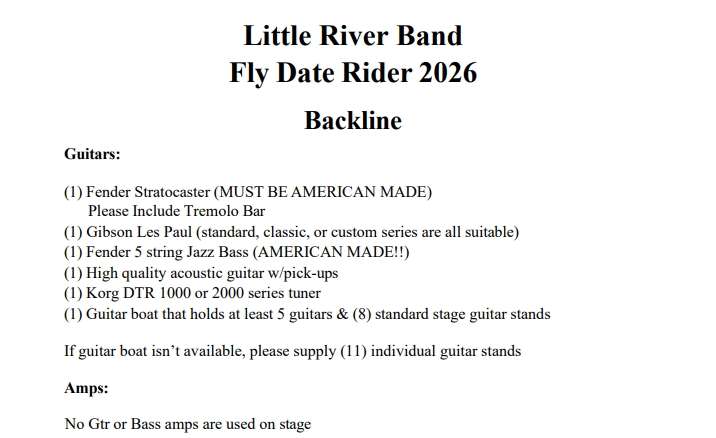
Little River Band publicly provides its 2026 Production Rider, Fly Date Rider, Stage Plot, Input List, Hospitality Rider and other touring documents.
In the Fly Date Rider, the Fender Stratocaster must be American-made.
The five-string Jazz Bass must also be American-made.
At the same time, the band does not use guitar or bass amplifiers on stage.
So if someone simply thought:
“They are a rock band, so let’s arrange a Marshall and an Ampeg.”
they would actually be creating unnecessary work.
The band also maintains separate riders for bus touring and fly dates.
The equipment the artist carries and the equipment that must be sourced locally changes depending on the travel method.
In other words:
Even for the same band, the Rider can change depending on how the tour moves.
Their documents make it very clear that the touring team is constantly thinking about how to make international touring smoother.
▶Jazz Orchestra| The method that allows the artist to perform at their best
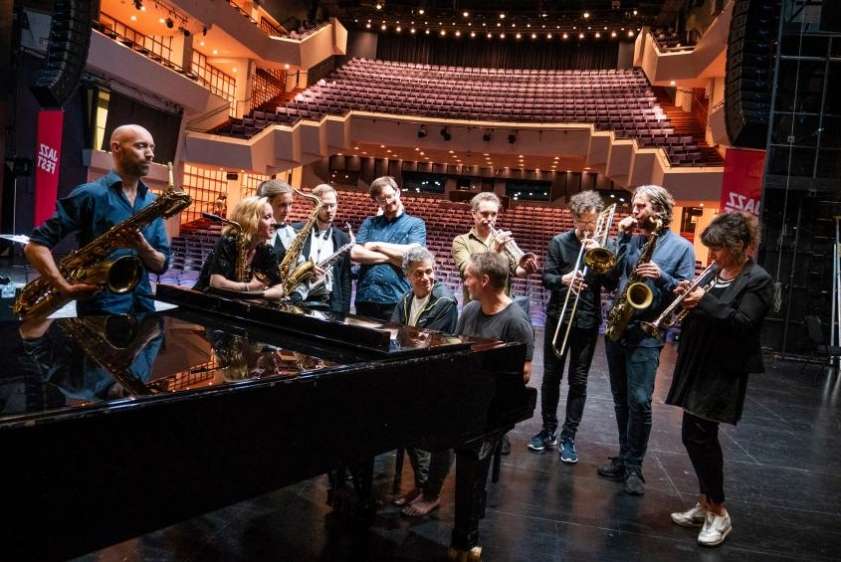
The publicly available Rider for Chick Corea with Trondheim Jazz Orchestra includes a particularly interesting monitor setup.
Eight stems are sent from the Monitor Console to Chick Corea,
and he then creates his own submix on stage before sending it to two wedge monitors
The Rider also requires:
- 11 music stands with lights
- Double Bass Amp
- Brass and Woodwind risers
- Remo Ambassador Coated drum heads
For the Grand Piano, the document simply says:
Refer to Chick Corea’s Additional Rider.
At first glance, this may seem extremely detailed.
▶World Music| Traditional instruments, very modern production
The 2026 Rider for Warsaw Village Band & BASSalyki is another fascinating example.
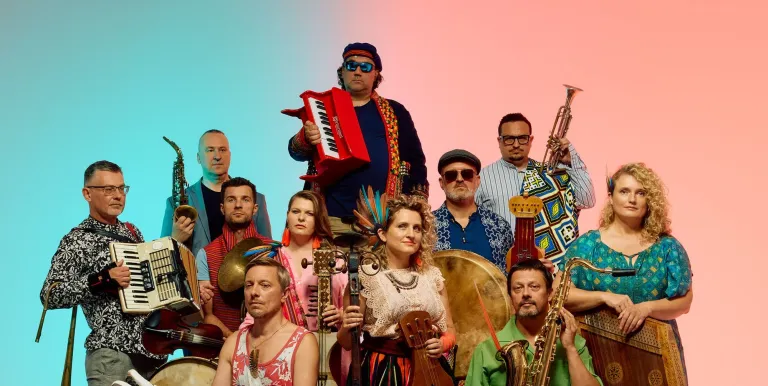
On stage you find traditional instruments such as:
- Violin
- Hurdy Gurdy
- Dulcimer
But behind the scenes, the production is very modern.
The FOH Console is specifically a Behringer Wing.
The Rider states that their presets are carried on USB and that the performance can only be run on this mixer.
It also includes:
- Wireless IEM
- A router covering the whole stage
- An app allowing musicians to adjust their own monitor mixes
- Prophet Rev2
- Roland Pad
- Click
And there is even this line:
“We do not accept mixing on the iPad and similar inventions ;)”
Just because the music uses traditional instruments does not mean the production is simple or old-fashioned.
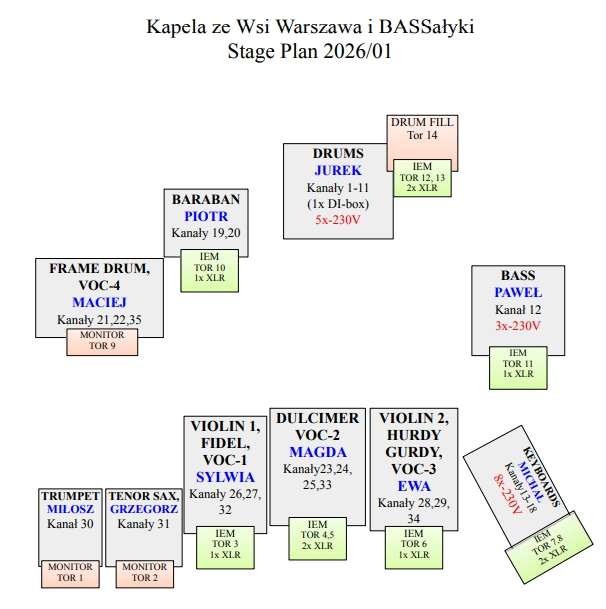
Reading the Technical Rider reveals not only how the artist reproduces their sound live, but also what kind of live environment they actually want.
So, read the Rider properly
One of the most dangerous things you can say in production is:
“It should be fine. We’ve always done it this way.”
“The Pioneer model is basically the same.”
“This console is more expensive, so it must be better.”
“A bass amp is a bass amp.”
“The venue already has lights.”
If you skim the Rider, you may completely miss the reason the artist spent years building that requirement into their touring system.
If you cannot provide something, ask.
If the equipment is different, propose an alternative.
Get approval from the artist’s side.
Try to understand why the requirement exists.
A Technical Rider is, perhaps slightly dramatically, the touring team’s:
blood, sweat and tears.
That is probably the proper level of respect to bring when reading one.
Hospitality Riders are fascinating too
A Rider is an artist’s list of requirements, and there is another side of the Rider world that often receives a lot of public attention.
The Hospitality Rider.
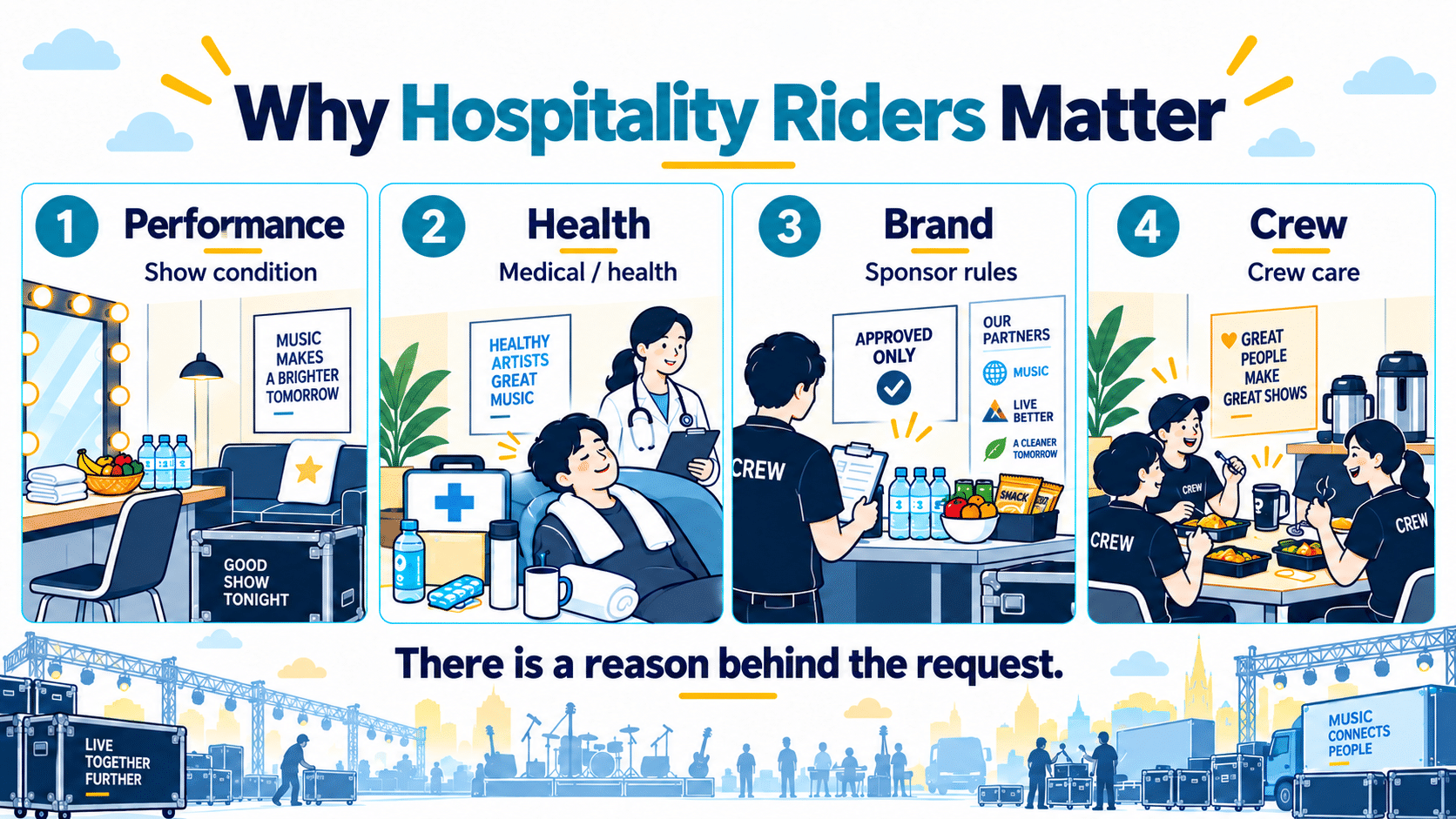
This covers the non-technical environment around the show:
- Dressing rooms
- Food
- Drinks
- Showers
- Transport
- Security
- Crew catering
- Working conditions
In online news stories, these documents are often presented as:
“Ridiculous demands made by international superstars.”
But the production team views it differently.
These documents also contain a team’s accumulated touring knowledge.
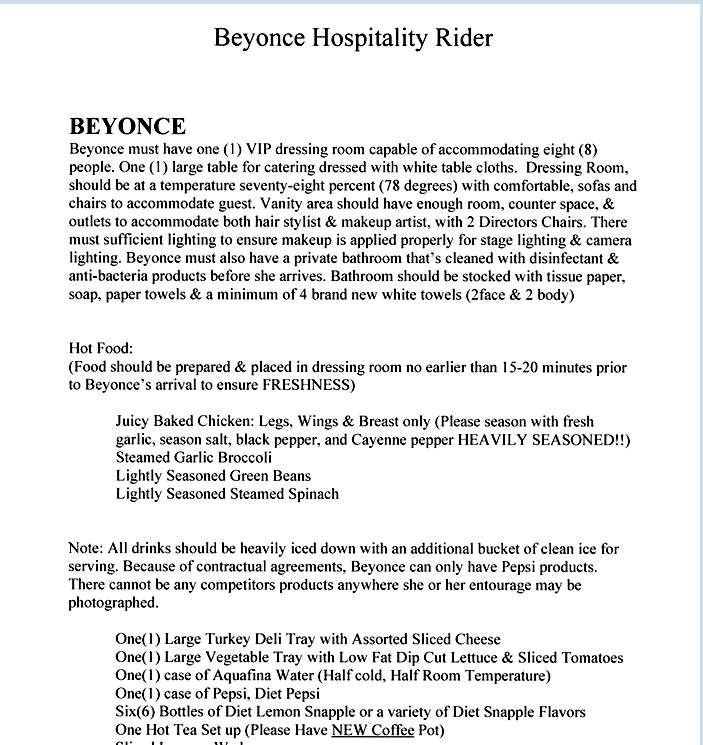
https://thesmokinggun.com/documents/crime/beyonce-breasts-and-super-bowl
Because Beyoncé had a commercial relationship with Pepsi at the time, the Rider also stated that competing products should not be placed anywhere Beyoncé or her entourage might be photographed.
At first glance, this sounds like a drinks preference.
But actually, it is about:
Sponsor obligations × Artist brand management
Even the drinks inside a backstage refrigerator can have a bearing on a sponsorship contract.
Ozzy Osbourne| Hospitality can also mean health management
Past reports about Ozzy Osbourne’s Rider have described requirements for an ENT doctor to be available at the venue, with the ability to administer treatments such as B12 and anti-inflammatory medication when necessary.
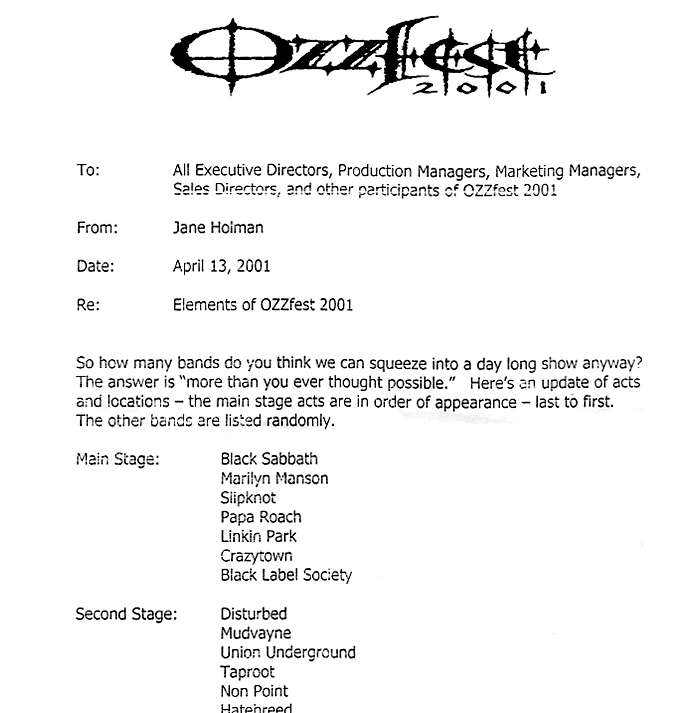
A 2001 Black Sabbath Ozzfest Rider also included items such as biscuits, tea bags and New York-style bagels for Ozzy in a separate dressing room area.
When we hear “rock star Hospitality Rider,” it is easy to imagine champagne and extravagant food.
But maintaining the artist’s physical condition before the performance can be just as important.
Foo Fighters|A 52-page Rider featuring a food colouring book
Foo Fighters’ 2011 Tour Rider is an incredible 52 pages long.

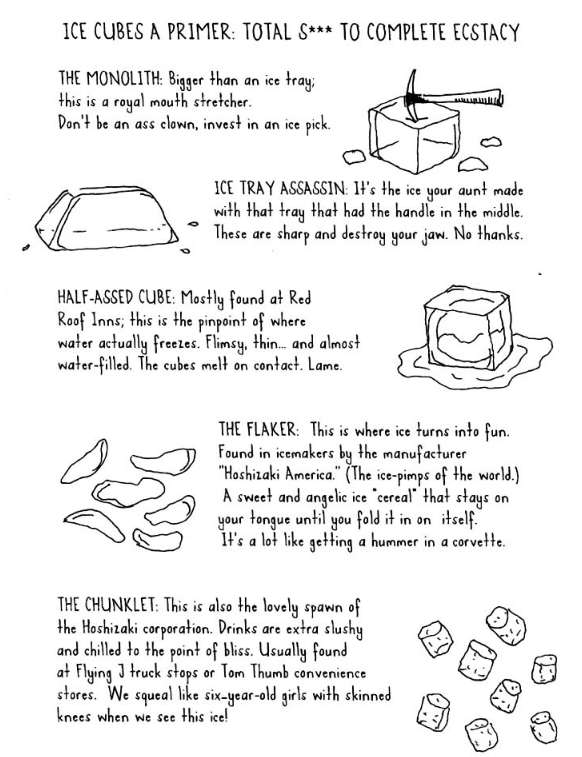
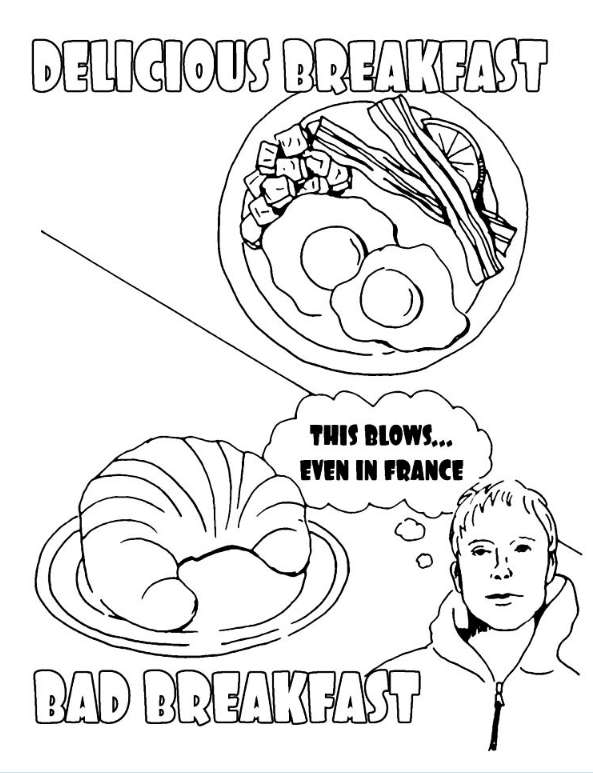
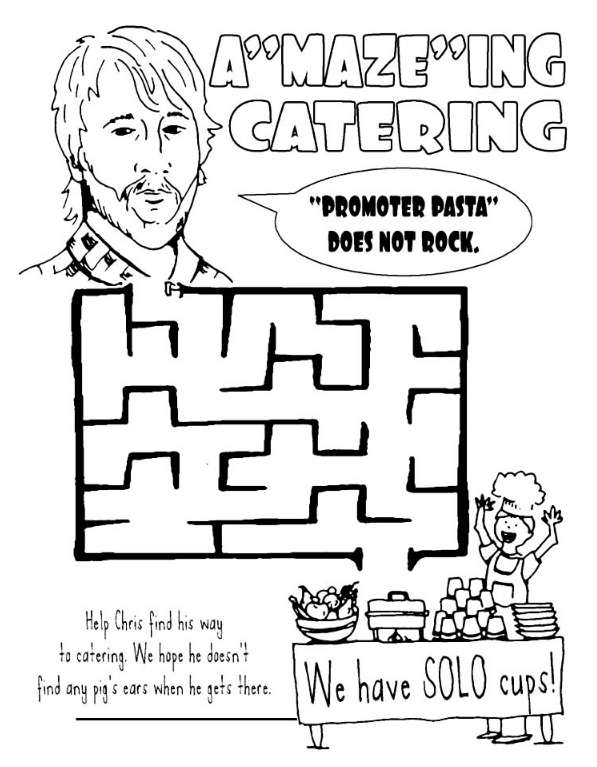
Foo Fighters’ 2011 Tour Rider is an incredible 52 pages long.
And inside it is a section called:
“Field Guide to Food: Coloring Book and Activity Pages”
which is basically a catering guide disguised as a colouring and activity book.
The pages were created by Tour Manager Gus Brandt, and The Smoking Gun described it as one of the most entertaining riders it had ever seen.
And the content is wonderfully chaotic.
It begins with an illustration of Dave Grohl holding a knife and fork.
Nate Mendel explains what makes a good breakfast.
Taylor Hawkins explains the difference between a good salad and a bad salad.
Chris Shiflett appears in a maze where the reader has to help him reach proper catering.
Pat Smear teaches us that “sweaty meats” are not acceptable.
There are quizzes about what belongs in a salad, a word search, and even pages devoted to discussing the difference between good ice and bad ice.
Then, completely unrelated to live production, the Rider also includes comments about how unfair it was that Chewbacca did not receive a medal at the end of Star Wars.
For a 52-page production document, it sometimes feels less like paperwork and more like Foo Fighters’ entire personality turned into a PDF.
Dave Grohl explained at the time that one of the most important things was simply making sure the crew was properly fed.
Crew members might arrive at the venue at around 7am and still be working at 2am.
So in many ways, the Catering Rider was there more for the crew than for the band themselves.
Behind all the jokes is a very serious message:
Eat properly, survive a very long day, and make a great show.
There is something genuinely lovely about that.
Japanese Riders and production documents tend to prioritise accuracy and efficiency, so they are often written in a very practical style.
Foo Fighters took a different approach:
Communicate what is needed properly.
But make the person reading it enjoy the process too.
That is surprisingly unique.
Personally, if I read this Rider before hearing the band play, I would probably already be thinking:
“I like these people.”
Van Halen | “No brown M&M’s”
Perhaps the most famous Hospitality Rider story of all belongs to Van Halen.
Their Rider in the 1980s genuinely contained a clause that essentially said:
Provide M&M’s, but remove all the brown ones.
At the time, Van Halen’s productions used huge quantities of heavy lighting and audio equipment, as well as specialised staging.
Venue load limits, power requirements and voltage specifications had to be followed correctly, otherwise there was a genuine risk of serious accidents.
David Lee Roth later explained that if the band found brown M&M’s backstage, it could be a sign that the promoter or venue had not properly read the contract.
And if they had missed the M&M clause, there was a chance that they had also missed something much more important, such as structural loads or electrical requirements.
In that sense, a bowl containing brown M&M’s could be a sign that:
“They may not have read the rest of the Technical Requirements either.”
Whether every detail of the story developed exactly as the legend now tells it is another discussion.
But the fact that it remains one of the most famous Rider stories ever told says a lot about how important these documents are in touring culture.
If a requirement looks strange, first ask why it exists
Whether it is a Technical Rider or Hospitality Rider, there will sometimes be a line that makes you think:
“Do they really need to specify that?”
But behind that one sentence may be:
- A previous production problem
- Artist or crew health
- A Show File
- A sponsorship contract
- The artist’s performance method
- A problem that happened at another venue
There may be a reason that is invisible to us.
A Technical Rider is not the answer. It is the start of the conversation.
A Technical Rider is not simply a list of absolute commands from the artist to the venue.
Of course, some contractual requirements must be followed.
But in international production, the show is built by comparing:
What the artist wants
with:What the venue can actually provide
That is why we need:
Rider + Venue Cross-check + Open Items + Approval Log = Advance Package
In simpler terms:
Artist Requirements + Venue Conditions + Unresolved Items + Approvals
= A clear production plan for this specific show
The artist-side and local-side Production Managers then work through the technical details together.
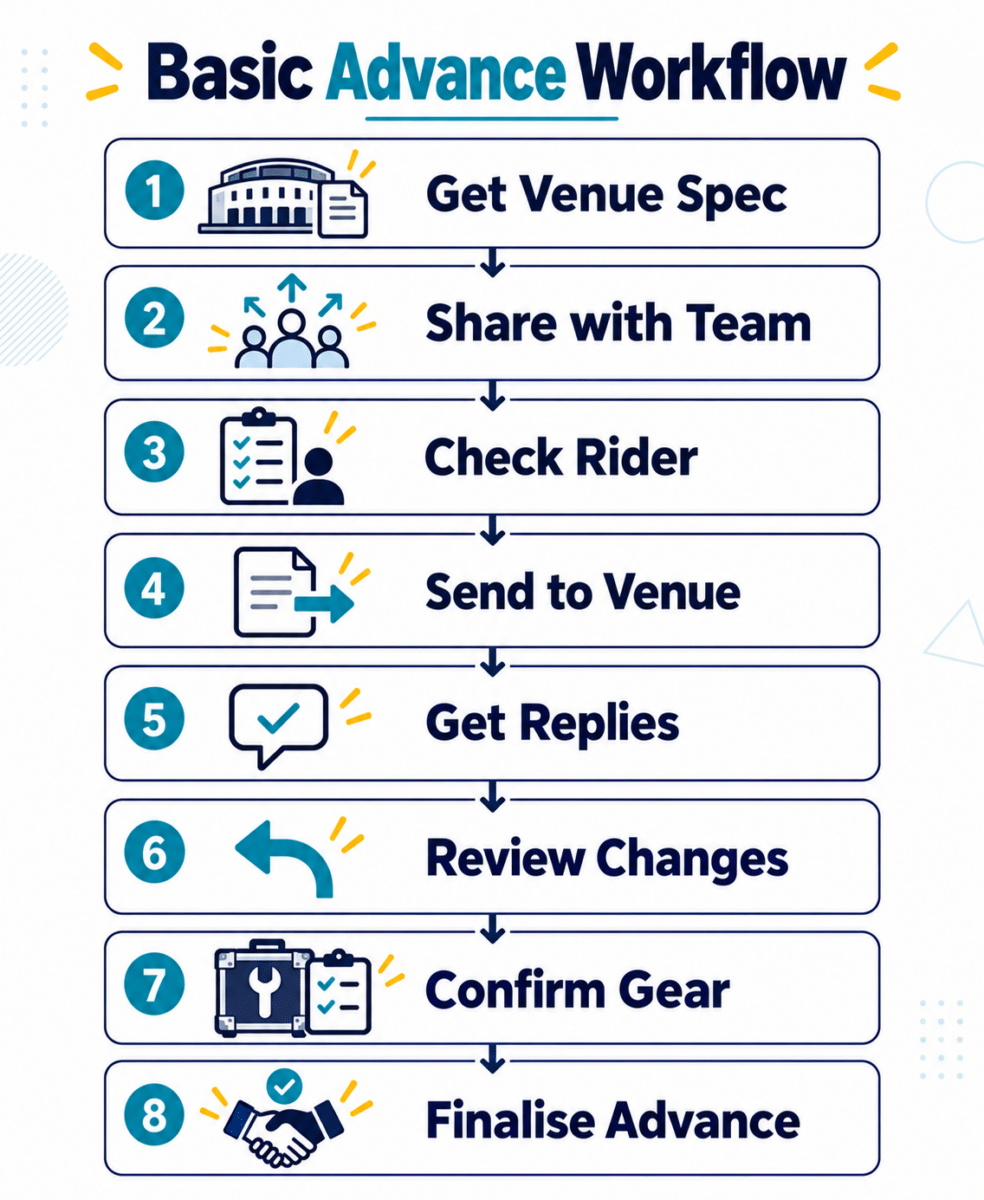
Read the Rider.
Compare it with the Venue Spec.
Identify what is missing.
Find alternatives.
Get the artist’s approval.
Remove unresolved items one by one.
And only then do we finally arrive at:
SHOW DAY.
In international live production, the show begins long before the artist walks onto the stage.
And one of the first blueprints for that journey is the Technical Rider.

Tripleguns operates from London, Singapore and Tokyo, supporting Japanese artists with international live shows and touring, including Technical Advance, Venue Coordination, Local Supplier Management and Production Management.